Expansion and Contraction

“There are only two movements of energy,” my yoga teacher noted as we arranged ourselves in Shavasana – the corpse pose – ready for relaxation, “expansion and contraction.”

I adjusted my legs, relaxed my neck, and closed my eyes. I observed my lungs: expand, and then contract.

For the next five minutes or so I meditated on this idea. Expansion and Contraction.

It is true that our bodies are constantly expanding and contracting – whether we are breathing, drinking, or eating.

In time we follow the pattern too: growing from tiny babies through our tweenies to big tall adults, followed my shrinking toward other side.

In economics its the booms and busts. The tide, the seasons, the planets – all seem to conform.

The universe is expanding now but maybe in another few billion years it will contract, preparing to start the cycle again.

I thought more about expansion and contraction driving home.

Do our lives follow the same pattern? When I look at my life I see it: when one area expands, another does seems to contract.

Social life expands, study contracts. Work life expands, social life contracts.

Sometimes we spend lots of money, and sometimes we save it.

Sometimes we put on weight, then we lose it. We have good hair days, and bad ones.

Sometimes we’re all go-go-go, but lack of sleep seems to find a way to catch itself up.

Our mind expands as we fill it with ideas, but then we need time process them.

Too much of anything and we burst. Not enough, we become black holes. So I suppose we should enjoy the pattern of the universe – its not like we have much choice!

Expanding to the Eye, looking back at its origins, the place where it will one day return?

A symbolic representation of John Wheeler’s “Participatory Universe”.

MY BRAZILIAN (… and a kombi named Betty)

102 days, 6 countries, 3 girls, x boys & 1 kombi named Betty.

So I’ve mentioned “my book” a million and one times, the travel memoir I’ve been working on every since my trip to South America some three years ago now. Think Eat Pray Love with a twist. As described in one of my proposals:

“Beginning by following others, and chasing love, Juliet finds herself travelling down a long and winding road to Brazil — through Paris, Japan and Christianity — the so-called “first world” that sits as a background to her first-hand experiences of South America. Wrapped around this tale of travel, food and (unrequited) love, is a deeper story about the narratives that construct our sense of self, and our world. The book uses unconventional, highly reflective storytelling techniques, partially inspired by French philosophy, as it toggles between breathtaking natural beauty, romance, meditation, and long, ramshackle bus rides.”


Well in May 2010 I finished my first draft (250,000 words) and in December 2011 I finished editing it down to my ninth draft (97,000 words – a typical book size). It took a HUGE amount of time, dedication, and help from a number of friends including “my American” (– words fail).

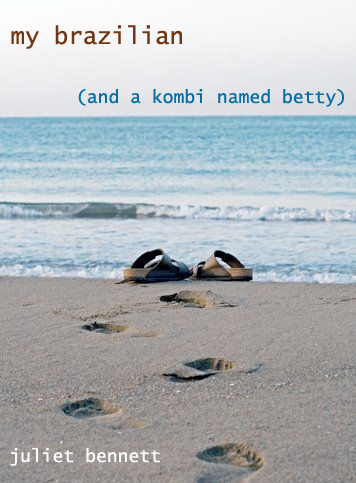
I haven’t yet had much luck with the literary agent who liked my proposal back in 2010, nor a publisher I submitted to a few weeks ago. And, well, in short I’m impatient. So I think I’m going to try the e-book thing which pretty much relies on one’s own ability to do PR and catch reader’s attention. No idea yet how I’ll do that. First step is to design a cover. Either something along the lines of the one above, or this one:

Blurb for the back:

This could be a story of love, fulfilment and self-discovery. It’s not. Surrounded and engulfed by raging, clapping, endless cascades… His blog was her obsession. They were living her dream. A planet of falls, lush forest, spray and rainbows… A South American odyssey. Fractals. Conscientization. What does love mean? Just fucking go. Perspective. Whirlwind. Water tumbled 80 meters down, so powerfully that it came back up again as mist, lingering everywhere… Co-authorship. Brazil. Freedom. Awe, turmoil, and transcendence. A white dove flew fearlessly along the edge…

Contents:

Prologue: Stories

PART 1 — STRIPPED BARE
Chapter 1: Time (Sydney)
Chapter 2: Live Earth (Buenos Aires)
Chapter 3: Jesús Calling (The Gringo Trail)
Chapter 4: Enchanted Isles (Galapágos)
Chapter 5: Enough Edgar (The Gringo Trail)

PART 2 — GOING SOUTH
Chapter 6: Enferma de Amor (Cusco)
Chapter 7: Nunca Say Nunca (Bolivia)
Chapter 8: Serenity, or not (Chile)
Chapter 9: ‘Doing a Bariloche’ (Argentina)
Chapter 10: The Fall (Iguazú & São Paulo)

PART 3 — ON TOP
Chapter 11: Does Size Matter? (Southeast Coast)
Chapter 12: All’s Fair… (Arraial d’Ajuda)
Chapter 13.1: Living Naked (Salvador)
Chapter 13.2: Yes and No
Chapter 13.3: Alone, with Others
Chapter 14: The Dénouement (Rio de Janeiro)

Epilogue: Death and Rebirth

Prologue:

What do you want out of life? Love? Money? Children? Adventure? Do you ever think about why you want these things? Do you think they’ll make you happy? What if they don’t? What if this idea is a just a story? Do you ever question the story? Do you wonder where these stories come from? Do you ever wonder if there’s more to the story?

I do. I think about these things a lot.

Maybe it’s because some stories I believed in my youth proved to be false. Like the one about Jesus being the only path to God, and like the one about modelling making me feel beautiful. Losing trust in these stories makes me wonder what other things I tell myself may prove to be false. Out of distrust grew doubt, out of doubt grew curiosity. The slow tantalizing process of striping away layers, plucking apart stories and moving closer to the “Truth”. It was a process that started long before the story that I’m about to tell you, and sure to continue long after it.

In South America I plunged into a whirlwind of stories that make up cultures, history and identity. Somewhere between New York and Rio I was hoping reignite the flame and live out my dream. What followed was richer and more meaningful than I ever expected. Years’ worth of life experiences packed into 102 days, spread across six countries. It was a search for freedom, for happiness, for love — and one beautiful beaten-up kombi named Betty.

Any thoughts?

Shall I publish as an e-book? Which cover? Is it something you’d buy? How much should I price it? Some recommend putting it on there for $1. But is that de-valueing my work? Or will it help it get out there? Shall I keep trying for the traditional publishing? If you have any connections to publishers or literary agents around the world… or any thoughts on the above… I’d love love love to hear!

Diseases of a world run by MBAs

‘A serious disease has re-appeared at Sydney University. Like tuberculosis, as soon as a cure is found and staff have been inoculated, a more virulent strain emerges. It has been labeled “hyper managerialism” and its symptoms are “efficiency in the name of inexplicable time wasting”, “infinite make-work-form-filling” and “gobbledegook language to organise thinking”. So far no test has been found which might identify early onset of the disease.’  [1]

Sydney University isn’t the only place suffering such an onset of hyper managerial disease. In a world “run by MBAs” it seems that human institutions are less efficient, more clogged up, than ever before. Whether one is applying to get a new scooter licence, get on a bus, or drive to work through 40km school zones, laws and institutions set up for our society’s health are clogging up our lifeways.

The profit motive seems to be bringing a return to assembly lines, hierarchies of authority, middle management syndrome, billions spent on IP lawyers, new logos and merging of departments, and hours upon hours spent filling out forms and gathering meaningless signatures of approval. What happened to the flat management structures ten years ago they were teaching us business undergrads were the best?

MBAs are running the universities, the schools, the hospitals, the governments, the banks, the businesses… the world! The question is: are they doing a good job?

‘A brief case study of one patient’s debilitating experiences may be helpful.’ Stuart continues his story.

‘Four weeks ago while attempting to appoint someone to a part time position in a Foundation which raises its own money and operates autonomously, I was startled by the arrival of forms labelled “permission to hire”, “permission to appoint” plus requests for a job description completed many years ago. Those controls seemed laborious but the germs they carried were not immediately obvious.

Over the next few weeks at least 12 people were consulted, three quarters of them from an office called “resources for humans”, the remainder from management with hyphenated titles who indicated that they were not responsible for the disease and had been isolated from it. I had contracted something dire.

In order to probe the mysteries of my condition, I became a self taught epidemiologist trying to separate the treatment from its cause. In this search, several individuals from the “resources for humans” office said in hushed voices that they were ashamed of their practices and that, although they washed their hands after receiving filled in forms, they had no alternative but to continue to ask for irrelevant information and to request numerous signatures to approve what was in the forms.

These innocents did ask “How can I help?”, an offer which gave the suffering patient a ray of hope. Yet as novice nurses in a stifling system, as soon as responsibilities reached a more senior consultant, usually with a title such as “executive to the executive” or “assistant to the executive to the executive” the helpful noises were replaced by telephone calls neither answered nor returned and emails which disappeared into a bureaucratic black hole.

I was then persuaded that if the appointment of the proposed Foundation employee was to be made before winter arrives — several years ago such a transaction took no more than 10 minutes — the protocols would have to be followed, boxes ticked, questions answered and signatures of approval gathered. For internal and external contacts that might be made by the appointee, questions included “How often does this interaction occur with the main contact and for what purpose does this position interact with the main contact?”

When my pain became almost unbearable I identified the chief of the “resources for humans” office and phoned him in a fit of fever and consternation. I thought the disease was a form of constipation which desperately needed a laxative and inquired as to whether he could kindly apply it to any part of the management anatomy.

He returned my calls, was courteous and gave another ray of hope, “Perhaps this appointment need not have been included in our usual vetting, consulting, form filling, signature collecting system.” At that point I also spoke with a senior academic whose colleagues were in bed, stricken with the disease. He advised that a laxative was relevant but not strong enough: “The whole system needs to be purged.”

Almost four weeks into fevers and hypertension but with the form filling now aided by an “executive to an executive” who put the job description into neat sentences in separate boxes, subsequently followed by constructive expletives from me — “Jesus you must be joking” — the day came to collect signatures from four worthy individuals, one described as a “line manager” which seemed to have something to do with country dancing.

Some of these individuals knew little about the job or the activities of the Foundation but in order to maintain the symptoms of the disease — “create information for the sake of it” — the signatures had to be collected, scanned and sent to almost any administrative officer prepared to check them. One of the signatures referred to “Finance Officer” but no-one in resources for humans knew who this might be, so I volunteered to visit a bus shelter on Parramatta Road and collect the signatures of the lonely looking people who wait there. Most look as though no-one has ever asked them for their autographs so they could have found my request therapeutic. A helpful assistant to an assistant from resources for humans found this suggestion original but unacceptable.

On day three of the fourth week, with the disease at an acute stage, a laxative of some kind appeared to be having an effect. Motion was reported by a personal assistant to an executive director which in effect meant that the appointment could be made on the date requested and would be approved even if it had not been approved. I was enormously grateful for such imaginative discretion but then someone suggested my appointee would have to go before a “classifications committee”, who would be making a classification, who might interpret the results and indicate whether complete health would ever be regained.

Into the fifth week of form-filling, signature-pursuing-trauma, the appointee received her letter of appointment but the offer was for a position for which she had not applied to be conducted in association with a person with whom she will not work. In vernacular parlance — let’s leave the medical model aside for a minute — this is a bureaucratic cock up. The resulting pathologist’s report said, “This looks like hyper managerialism — a form of inefficiency in the name of efficiency prompted by MBA type wisdom.” […]’ [1]

Let’s look at one more example: the efforts to fire 340 academics on the basis of the number of publications from the last four years.

Rather than investing in long-term research, or the quality of the teaching of students, the University of Sydney seems to believe if someone hasn’t published four articles or books in the last three years, they are out!

Quantity is apparently more important than quality.

‘The cuts have provoked an outcry,’ writes Dr Nick Riemer, from Sydney University Linguistics and English departments. ‘With its simplistic measures, how will Sydney maintain research quality, when the finest researchers couldn’t possibly teach and publish consistently at the rate administrators demand? How can management sack staff with classrooms already so crowded?

Sydney’s administrators have not been so different from their counterparts elsewhere. Administrators everywhere are trying to shrink their already overstretched academic workforces. Universities, apparently, just don’t need academics.  […] University technocrats are the equivalent of the regulators whose negligence caused the GFC. Just as markets favoured complex financial instruments far removed from commodities, so too universities have been alienated from their basic rationale by an ascendancy of executives hostile to the principles that should govern academic communities: respect for students and staff; research unfettered by philistine ”productivity” requirements; security of academic tenure; uncasualised labour; low student-staff ratios. These are the ways to guarantee academic ”productivity”, rather than its bureaucratic substitutes. It is the managers who are unproductive. Systemic managerial failures are compromising quality.’ [2]

Given both my research degree is at Sydney University and new position with the Sydney Peace Foundation (yes, Stuart’s article was about me), maybe I should be keeping my mouth shut. But, then, that would hardly be true to my personal ethos nor that of the Foundation.

It takes courage to stand up against those in power. It takes courage to stand up for what’s right. The Sydney Peace Prize recipients and the Foundation’s Council members are inspiring examples of such courage.

What’s the cure to this hyper-managerial disease? I’m not sure. But, like any disease, courage to fight is definitely a part of it.

Read more of Prof Stuart Rees articles on the Sydney Peace Blog and check out the amazing company whom I now work for: Sydney Peace Foundation.

[1] See full article “What’s Ailing Sydney University?” by Stuart Rees first published by New Matilda: New Matilda 23/04/2012[2] “Should unproductive academics be made redundant?” Opinion, Sydney Morning Herald – April 14, 2012: http://www.smh.com.au/opinion/the-question/should-unproductive-academics-be-made-redundant-20120413-1wyle.html#ixzz1t1hPYiRu

[3] “Upset over faculty merger plan at Sydney University” Andrew West and Heath Gilmore – Sydney Morning Herald – June 21, 2010: http://www.smh.com.au/national/education/upset-over-faculty-merger-plan-at-sydney-university-20100620-ypby.html#ixzz1t1huAYnr

[4] “Sydney Uni calls time on 150-year Latin love affair” Heath Gilmore, Sydney Morning Herald – February 17, 2010: http://www.smh.com.au/national/education/sydney-uni-calls-time-on-150year-latin-love-affair-20100216-o8zk.html#ixzz1t1iFpDEM

 

Polymathy and promiscuity

Remember the times when one person was a philosopher, a scientist, an inventor, a musician and an artist? No? Well that’s because people now specialise too much, and generalise too little. That’s the way our education system and our job opportunities work. That’s why we are told to choose one thing and become a master at it.

Back in the Renaissance days things were different.

I remember first stumbling across the “polymath” on wikipedia about five years ago. I was in awe and inspired by the concept.

A polymath is a more positive way of referring to a “jack of all trades” — a person who has expertise in many different subject areas.

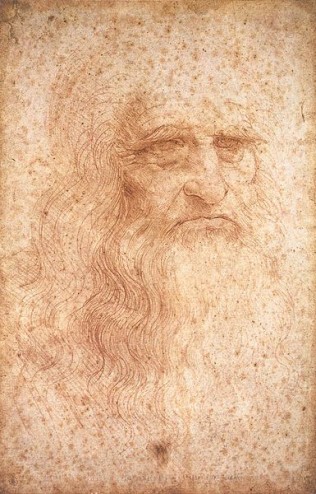
Leonardo Da Vinci is a prime example: a painter, sculptor, architect, musician, scientist, mathematician, engineer, inventor, anatomist, geologist, cartographer, botanist, and writer. The pursuit of knowledge crosses over many areas, each which feed off and inspire one another.

Polymathy hasn’t completely disappeared. I have a friend who has been a fashion model, a fashion designer (in Milan), a property developer, a scientist (he has a PhD in molecular biology), and an entrepreneur in premium Italian pasta. Very impressive, and I’d say he’s a polymath (though not yet a Da Vinci!)

Back then it was easier, I think. Five hundred years ago there was approx 500 million people. That’s a world population of half-a-billion. Now we have 14 times that number – that’s a lot more competition. And a lot more history, science, math, literature etc to learn!

Still, following my last entry about it supposedly taking 10,000 hours to master something, I want to say it does seem advantageous NOT to stick to just one thing.

In times where specialisation seems over-specialised to the point where it becomes trivial, embracing knowledge in different areas and finding your own niche in the cross-over is where many opportunities lie. It may take more than 10,000 hours, but I imagine the process in and of itself is rewarding.

Professor Stuart Rees advises his students to “be promiscuous” with life, that is, (metaphorically) to “get into bed” with different subjects, theorists, life experiences and types of friends. Each and every endeavor carries different skills, which add to different areas of your life. So go — be promiscuous, and bring back polymathy!


All it takes is 10,000 hours

They say it takes 10,000 hours to be a master at something. Who are the They? Not sure, but They know… ok?

After my last post about a human life equating to up to one million hours on earth, and pondering how many hours of that we waste in traffic, it seems somewhat appropriate to follow it up by asking how many hours we spend doing the things we actually want to do?

How many hours do you spend making love? Being creative? Working on projects that excite you? Developing your skills to become a master of something?

There are 8765 hours in a year. Assuming you spend a third of that sleeping and eating, you could be a master of something in 2 years. But add social commitments, trips to the gym, work etc etc… well 10,000 hours may end up being spread over an entire lifetime.

To give you some more precise numbers….

If you treat your skill as if a full time job, it’ll take more like 5.2 years.

10,000 / 8 = 1,250 working days
1,250 / 5 = 250 working weeks
250 / 48 = 5.2 working years

If you’re trying to fit in a full-time, or even a part-time job, on top of trying to master your skill, it will take a lot longer…

If you invest 3 hours per week it will take you 64 years!

10,000/ (3*52) = 64 years

A friend recently advised me to “choose something, anything, but ONE thing, and kick ass at it.” In a world of 7 billion people where to get anywhere you really do need to master something – be it a skill, a niche business or a niche role in someone else’s – you need to get good at something. Getting really really good at one thing is more highly rewarded than being pretty good at many things…

What’s your “one thing”? How many hours, years, decades do you have till you’ll be a master?

I think my “one thing” is writing, that’s what I really love doing. But what kind of writing? As the eclectic nature of this blog shows, I haven’t really chosen that “one thing” to write about yet. I probably should work at getting really good at writing on something more specific, for a specific audience.

10,000 hours out of 1 million hours – it doesn’t sound like much.

I turn 30 this year = I’ve already used up 260,000 of my hours. 740,000 hours remaining. And that damn clock – it never stops ticking!

“Twenty years from now you will be more disappointed by the things you didn’t do than by the ones you did do. So throw off the bowlines, sail away from the safe harbour, catch the trade winds in your sails. Explore. Dream. Discover.”
–- Mark Twain

Note: I took this pic in Jervis Bay a couple of weeks ago. Drinking beer on a catamaran watching pelicans float by may not be time mastering a skill, but it does seem to pause the clock.

A human life, one million hours

In the scheme of things when you spend two hours in traffic each work day, or half an hour waiting in line for a coffee, or forty hours a year gathering together your receipts and filling out your tax return, what % of your life are you spending doing things you don’t want to be doing?

[A deleted scene from My Brazilian]:

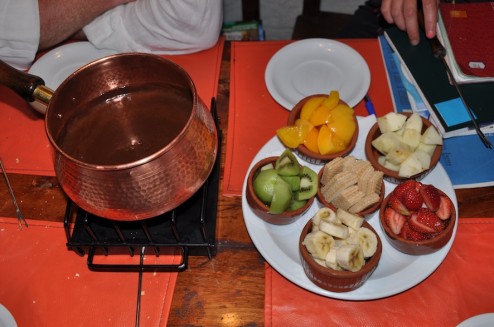
At a restaurant in Argentina, after many-a glasses of Malbec and chocolate fondue, I found myself in an existentially mathematically reflective mood.

“How many hours am I to be on this planet?” I asked, taking pen to paper.

Let’s say I’m really lucky (or not, depending how well I maintain health) and I live to 120 years old.

120 years (x 365) = 43 800 days, which (x 24) = 1 051 200 hours.

‘A million hours! That’s really not very much.” I frowned at my diary.

(x 60) = 62 412 000 minutes.

‘Hurry up with that bill,’ said Rosa after I’d shared my calculations.

‘Not many hours left,’ Kellee joked.

‘Changes your perspective doesn’t it.’ I remarked.


So… say I spend 50 years working somewhere it takes an hour in transit to reach each day… 50 years (x 48) = 2400 working weeks (x 5) = 12000 working days, (x 2) = 24000 hours in transit. That’s (24000/1051200) = 1% of my life sitting in traffic! Crap!

How long did I just spend posting this? How long did you spend reading it? Tick tick tick tock… 🙂