Adventures with Ideas: Truth, Beauty, and the Paradoxes of Life.

Peace

Blogs, Fashion and a Favour… “Enough” by Nicole Bennett

My sister, Nicole Bennett, was the first person to introduce me to “Fair trade”. She travelled to Burma, India and other countries getting the bad end of the globalisation stick, long before I did, and became passionate about making a difference. She inspired me to want to make a difference too. I’m (hopefully) doing it through my research and writing. Nicole’s doing it through her (soon to be certified) fair trade eco-friendly fashion label “Enough”.

“Enough” is all about knowing when to say “enough is enough” – enough injustice, enough poverty, enough destruction of our environment, (slightly paradoxically, she knows) enough stuff!

These are a couple of photos from her look book shoot last year:

There are more photos of me modeling her stuff of far better resolution on Margaret Zhang’s blog:

http://www.shinebythree.com/2011/01/not-enough-of-nicole-bennett/

And now the favour I have to ask:

Nicole is close to winning a free website in a competition. If you could spare 30 seconds of your time to click this link and then click “like” next to her label – “Enough” – then she has a very good chance of winning:

http://www.facebook.com/letsmakeawebsite?sk=app_215628168512018

The competition ends in 3 days and 22 hours from now so PLEASE help her!!! Thank you so much!

PS Nicole has been blogging her journey here (although she’s let it lapse a bit…):

http://iwanttobeafashionguru.blogspot.com.au/

Share this article


Psychology of Violence and Peace

Posting for convenience for a class I’m teaching… I’ll add more later.

Stanley Milgram Experiment and Zimbardo Stanford Prison Experiment:

YouTube Preview Image

Zeitgeist Moving Forward (2011) part 1 – Human Nature

YouTube Preview Image

From 9min-40min.

Share this article


“Occupy Wall St” – bringing down The Pyramid?

What is #OccupyWallSt? Who are the 1%? Why did it take the media so long to report on it? What do protestor’s want? Are they trying to bring down The Pyramid? Will they succeed?

I am teaching a class on the Philosophy of War and Peace in North Carolina, with a specific focus on the Arab Spring. Yet here in America I might be witnessing the greatest revolution of them all: the “OccupyWallSt” movement, and its children.

When I showed RapNews to students a few weeks ago, I had no idea that it would become prophetically true:

YouTube Preview Image

People have been camping out in Zuccotti Park (formerly “Liberty Plaza Park”) for almost a month, and yet the media in America only started reporting on it just over a week ago. Why?

What is “OccupyWallSt”?

OccupyWallSt (and OccupyChicago, OccupySydney, OccupySeasameSt etc) are peaceful protests against the foothold that corporations have over the state of global affairs including economic injustices, environmental destruction, providing weapons to both sides of wars, controlling the media and making politicians their puppets.

Like the Arab Spring, the demonstrations don’t have a leader. It began with 1000 people walking down the street,and 100-200 sleeping in the park. The idea was originally proposed in an Adbusters (an advertisement-free, anti-consumerist Canadian magazine), who suggested protesting against the lack of holding Wall St responsible for their actions re the global financial crisis, global poverty and their pervasive influence on democracy.

Why did the media take so long to report?

Because the media is owned by corporations, of course.

What do protestor’s want?

I will be able to answer this question much better in a couple of week’s time, after I visit Chicago and Washington DC, and even more so after Thanksgiving when I visit NYC… but for now, this is what I can gauge:

Protestors are holding signs like:

“I am a human being, not a commodity”

“I will believe corporations are people when Georgia executes one of them”

“Money for jobs & housing NOT banks & war”

“We are the 99 percent”

Nobel prizewinning economist Joseph Stiglitz and Jeff Madrick (former economics columnist for the New York Times and author of Age of Greed: The Triumph of Finance and the Decline of America) recently spoke with Wall Street about what caused the global financial crisis. On Australia’s ABC, Peter Lloyd interviews Jeff Madrick click here. Despite the mainstream media’s attempts to make out the protest is “inefffective action”[4], Madrick says that “The fact is the gut feelings of these people or the informed feelings of some of them because there are a lot of educated people there, are essentially correct. They are correct that Wall Street was the principal cause of the great recession, that greed and outrageous pay was a principal cause and that Washington has not properly dealt with it…”[5]

There is talk of the protest being the left wing response to the “Tea Party”, with one big difference. Madrick notes “These people don’t march to one drummer like the disciplined Tea Party. These people think for themselves, have independent frustrations, have independent agendas.”[5]

Who are the 1%?

According to the Washington Post the top 1 percent are those American households who “had a minimum income of $516,633 in 2010 — a figure that includes wages, government transfers and money from capital gains, dividends and other investment income.” [2] Their average wealth was $14 million in 2009 (down from a $19.2 million peak in 2007).[2]

Documentaries like Inside Job names and shames some of the 1% who were responsible for the Global Financial Crisis (GFC).

YouTube Preview Image

Who are the 99%?

The rest of us! Anyone who makes less than $516,633 a year.The 99% are the ones who paid (and are still paying) for the GFC. The 99% want to work, and there’s lots of work to be done, but there’s no money for them to pay one another because the greedy 1% have sucked it out of the system and put it in their pockets.

Ezra Klein in the Washington Post breaks this down further: “the bottom 60 percent earned a maximum of $59,154 in 2010, the bottom 40 percent earned a max of $33,870, while the bottom 20 percent earned just $16,961 at maximum.” [2]

What influence does money have on politics?

For a simple explanation check out the “Story of Stuff”:

YouTube Preview Image

and

“Story of Citizens United v. FEC”:

YouTube Preview Image

The Pyramid: Laws, Population, Poverty & Ecology

My Master of Peace and Conflict Studies taught me that global politics, economics, military, society and psychology are intertwined and extremely complex. My attention has been drawn to the intersections of growing population, poverty and the ecological predicament they create: (1) For global population to stabilize we must help people at the base of the pyramid out of poverty; (2) We need six Earths to sustain 7 billion people living like Americans and Australians do; (3) Technology will only solve this problem if the people at the top invest in it.

In short, a sustainable habitat and lifestyle for humans requires the priorities of corporations need to change from the legalized goal of profit for shareholders, to the moral goal of improving the lives of people in the world today and in the future.

Let me recap a useful metaphor: The Pyramid. In Preserving The Pyramid: Why things are the way they are I proposed that things are the way they are because they have been designed this way: poverty, religion, education systems, health-related issues – all of our problems are (at least in part) designed to preserve “The Pyramid”.

Changing laws and priorities isn’t easy, particularly when The Pyramid has guardians around all its walls, protecting the wealth and power of the elites at the top.

Are protester’s trying to bring down The Pyramid?

I don’t think so. It seems to me these protesters are using non-violent conflict to demand a more mobile hierarchy of power, a global social and economic pyramid that doesn’t exploit the people it is supposed to protect. That makes them my heroes.

What can be done?

The power in The Global Pyramid today lies with the bankers and stockmarket – people with a license to print money or make  money from nothing – shuffling papers, or giving letting others shuffle papers for them.  If shareholders invest to make profit, then companies will continue to put profit before people and our planet. Even if shareholders personally care more about life than money, the system has become bigger than it’s parts.

Madrick gives some more specific suggestions: (1) “get over this obsession with austerity economics”; (2) “reinvest in this economy in significant ways”; (3) “we really need a different regulation scheme for Wall Street”. Unfortunately this latter suggestion, Madrick suggests, “will be very difficult to do given the power and money on Wall Street.”[5]

How can the rules that govern Wall St be updated to prioritize life and our ecosystems over monetary profit? Which laws need to be changed? How can the economy be stimulated without needing to fund both sides of wars? How can Wall Street be better regulated?

Will the #Occupy Movement succeed?

“Can I say this will end in complete victory?” Madrick asks, “No, you can never say that. But it may begin to change public opinion enough to give Congress people in Washington the courage of their own convictions. Many of them are disgusted by what’s happening and can’t get any traction for their own ideas and maybe they will begin to get the courage to come forward… The American establishment has the courage to ask one fundamental question: what is Wall Street for?  Do we need a Wall Street that takes 40 per cent of American profits? No way. Let’s rethink that. But the American establishment seems anyway afraid to ask that question and we have to start asking that.”[5]

The protesters give me hope. They are turning words into action, demanding their (and our) basic human rights, they are making peace a verb.

References:

[1] ^ What’s behind the scorn for the Wall Street protests?, Glenn Greenwald, Salon, September 29, 2011; accessed September 29, 2011

[2] http://www.washingtonpost.com/blogs/ezra-klein/post/who-are-the-1-percenters/2011/10/06/gIQAn4JDQL_blog.html

[3] http://politicalticker.blogs.cnn.com/2011/10/10/poll-half-the-country-has-heard-about-the-occupy-wall-street-protests/

[4] http://www.economist.com/blogs/democracyinamerica/2011/10/wall-street-protests

[5] http://www.abc.net.au/pm/content/2011/s3332160.htm

Share this article


Ten ways to change the world

Recently learning about the occupation of Wall Street, I thought it worthwhile to re-post my two cents on ten ways to change the world:

Legally:

1. Change corporation law – redefine “corporation” so that they are NOT treated as separate entities in their own right that can be declared bankrupt in and of themselves. Corporation law must be adjusted to hold shareholders responsible for monetary and non-monetary profits and loss.

2. Change finance / stock market laws – in implementing the above, the ST money market would probably have to go, as would trading Derivatives and Options. The stock exchange would slowdown and be based on long term investments.

3. Change banking laws for money/debt creation and collection – limit their ability to print money via debt, decrease bank’s profits, and maybe all debt cancels after 50 years, I’m not sure. Something needs to be done to regulate them though.

4. Change balance of power in the WB, WTO and IMF – give more votes to the poorer nations and create fairer trade policies

5. Create international tax laws – to crack down on tax havens.

Personally:

6. Philosophically, a self-examination of our values – what makes a life “good”? Two shifts: shift from valuing capital to valuing creativity; and shift from EGO to ECO.

7. Women might reconsider what they find attractive qualities in men – see the attraction of a creative and caring man over a rich and selfish man. Then maybe men will change in suit.

8. Write letters to corporations telling them you won’t buy their product until they stop slave trade and ridiculously low paying 80-hour weeks in sweatshops, and treat their workers in a way they would like to be treated.

9. Public shame of the ridiculously rich – unite in an attempt to decrease the obesity of the rich, and as a consequence decrease the hunger of the poor.

10. See what we might be able to do to campaign to change the laws above.

Essentially I’m talking about setting a limit to the lifestyle of those at the very bottom and very top to the pyramid.

There’s nothing wrong with inequality – we don’t have to earn the same amount, eat the same amount, live in the same way. But there needs to be limits, on both ends. No one in the world today should go hungry, just as greed bastards at the top shouldn’t avoid paying tax and conduct their business in unethical ways.

A smart friend told me: “if you wanna work smart and hard and eat lobster all the time, and if I wanna work little and eat noodles, then that’s cool. But we both should have food and shelter. It’s just a matter of cutting out the extremes and increasing social mobility between the classes.”

It’s about having the freedom to choose where you will be located within The Pyramid: how much power you want to have (ie how involved in politics, corporate world and media), how much and how hard you want to work, and the lifestyle that you want to live.

I will have more to say about the Wall Street situation soon…

If you are not yet familiar with “The Pyramid”, check out the post Preserving The Pyramid: Why things are the way they are. In short this blog proposes that things are the way they are because they have been designed this way: poverty, religion, education systems, health-related issues – all of our problems are (at least in part) designed to preserve power structure that I metaphorically refer to as “The Pyramid”. Click here to see full post


Share this article


20 Essential TED Talks on Peace

A chick working for Online Colleges contacted me to share the following collection of TED Talks for Peace Studies students. I’m working my way through them and thought you might like to watch some of them too. Just click on the heading and the TED talk will open in a new window.

Rabbi Jackie Tabick: The balancing act of compassion

Peace requires a delicate brew of justice, equality and compassion, and what makes it such a tenuous, ethereal concept is striking the proper balance. Although her talk doesn’t much center around politics and economics, but rather religion and the concept of “compassion fatigue,” what Rabbi Jackie Tabick has to say on the matter will still resonate with peace studies students all the same. “You have to, of course, be aware of the needs of others, but you have to be aware in such a way that you can carry on with your life and be of help to people,” she warns — certainly a credo all compassionate, loving people should consider, albeit one difficult to fully implement.

Emiliano Salinas: A civil response to violence

Former Mexican president Carlos Salinas de Gortari’s son Emiliano Salinas very bluntly addresses the violence currently ripping his nation apart — but what he has to can easily apply to different regions and historical periods. Despite his privilege, the speaker expresses genuine concern over Mexico’s descent into violence and drug from a citizen’s perspective, admitting that doing so might very well incite controversy. Salinas’ main thrust involves chastising apathy, because he believes succumbing to fear and perceiving the innocent as “victims of circumstance” allow injustices to keep happening.


Ellen Gustafson: Obesity + Hunger = 1 global food issue

Humanity will never enjoy lasting peace until the basic needs of all people can be met, and nothing illustrates this disparity like obesity issues in developed nations and starvation in their less fortunate counterparts. Ellen Gustafson’s 30 Project hopes to close this gap over the next three decades by altering agriculture itself, namely exporting technology as well as foodstuffs. Having worked with the United Nations World Food Programme, she knows firsthand exactly how both hunger and overconsumption problems burst into existence.


Philip Zimbardo shows how people become monsters…or heroes

As the instigator behind the infamous (and still-controversial) Stanford Prison Experiment, the former American Psychological Association president intimately understands how high-pressure circumstances try individuals and force them into brash actions. Here, Philip Zimbardo talks about his book The Lucifer Effect and the Abu Ghraib prison scandal, for which he served as an expert witness once it went to trial. The lecture itself, however, isn’t really about jail reform, but rather the intense psychology behind individuals choosing between perpetuating justice and injustice — a topic all peace students and activists must absolutely understand if they hope to instill permanent positive change.

Imam Faisal Abdul Rauf: Lose your ego, find your compassion

Muslim (or even religious) or not, Imam Faisal Abdul Rauf’s coaxing towards global understanding and heightened communication applies to pretty much everyone. He uses his faith as an example of how he understands compassion, but the Qur’an’s teachings extend beyond the boundaries of Islam and frequently parallel those found in Christianity, Buddhism and plenty others. At its core, he touts, the universal message discourages self-centeredness and believes overarching, selfless love stems directly from sloughing off arrogance — a statement even the most ardent atheist can find agreeable.


JD Schramm: Break the silence for suicide survivors

When most people speak of peace, lofty images of eradicating war, famine, pestilence, needless death and other ills typically emerge in the populaces’ mind — but the idea requires application on a micro level to survive as well. Even in the most boastfully “equal” and “enlightened” societies, the mentally ill (most especially the suicidal and suicide survivors) still suffer beneath marginalization and stigmatization. In less than four and a half minutes, business and communications expert JD Schramm illustrates one way to make the world a better place right here at home; not to mention how serious issues don’t always inspire external manifestations.

John Hunter on the World Peace Game

Lasting peace is totally useless its core components never end up in the minds of succeeding generations, and teaching it helps reinforce teachers and students alike. John Hunter’s students play the World Peace Game, where global problems loom on a plywood board, by formulating creative — sometimes even viable! — solutions. He believes their approach, as well as the lessons gleaned during engagement, could very well benefit them (and maybe even the world) for life.


Rev. James Forbes: Compassion at the dinner table

One thing activists and students must absolutely understand is that their goals don’t have to necessarily benefit millions (if not billions) right off the bat. Like Rev. James Forbes elucidates, simple, neighborly lessons his parents instilled in him over regular family dinners possessed a right fair amount of resonance. All it takes is a show of love, support and selflessness to inspire others — who, in turn, inspire others. Who inspire others. And so forth. Initiating many ripple effects instead of aiming for one giant display might very well be what it takes to change things for the better.


Jody Williams: A realistic vision for world peace

Merely touting an event or a protest as “for world peace” doesn’t exactly put an end to violent conflict — participants must engage themselves to the fullest extent personally possible and coagulate specific goals with specific solutions and specific projected outcomes. This Nobel Peace Prize Winner knows that peace requires sustainability, justice, security and equality in order to mean anything, and her TED Talk showcases some amazing women fighting for all four elements. Check out Jody Williams’ particularly inspiring favorites when looking to formulate projects sporting solid structures and more permanent results.

Viktor Frankl: Why to believe in others

TED sometimes posts historical video footage of political, academic and/or social significance for its viewer’s intellectual stimulation; this small-but-piquant talk by pioneering psychologist Viktor Frankl is absolutely essential viewing for many different majors. As a Holocaust survivor, he found himself particularly fascinated by how humans make decisions to create meaning in their own lives, the lives of others and the positive and negative impacts of both. Some might dismiss Frankl’s views as too idealistic for these cynical times, but he still earnestly believed that love begins with trust, understanding and mutually beneficial exchange…and from there, peace.

Shaffi Mather: A new way to fight corruption

Bribery and underhanded bureaucracy stand as probably the most major roadblocks to national and international peace, with sociopathic authority figures supposedly for the people looking out for their own self-interest. With a bit of entrepreneurial spirit and cunning, it might very well be possible to start chipping away at this unfortunate phenomenon and dispense real justice. Shaffi Mather wants to do just that, dissecting the “supply and demand” economy of bribery and formulating plans turning its very structure against itself.


Joseph Nye on global power shifts

Peace studies students (especially those hoping to explore the subject from a geopolitical angle) should understand how hegemonic power theory works, which former Assistant Secretary of Defense Joseph Nye explains here. Pulling directly from human history and using today’s rivalry between the United States and China as an example, he spends nearly 20 minutes explaining the concept. Such massive conflicts obviously challenge international relations and human rights — factors which can easily escalate into violence and other ills — and warrant considerable research to prevent something horrible.


Jessica Jackley: Poverty, money — and love

Jessica Jackley co-founded Kiva.org to provide the impoverished worldwide with “microloans” earmarked for creating economic opportunities and accomplishing professional and personal dreams. Her TED Talk shares some of the stories and people who inspired her before, during and after the nonprofit’s launch — and, of course, some great anecdotes about some of its successes! As its simple title states, everything Jackley has to say revolves around the intersection of love, compassion and charity with the hope of accomplishing lasting goals.


Stefan Wolff: The path to ending ethnic conflicts

Although immediate (or near-immediate) access to news sources make it seem like civil wars, genocide and other ills stemming from ethnic conflict are at an all-time high, Stefan Wolff’s statistics say otherwise. In fact, he’s noted a 10% decrease in the number of civil wars and civilian casualties between the 1990s and the 2000s’ first decade — but that doesn’t mean humanity should settle and start cheering just yet. Juxtaposing “good news” with the horrific, Wolff notes that the decline contains some exceptionally valuable lessons on how to maybe keep the numbers (very) slowly lowering over time to nurture a more sustainable, nonviolent end.

Jamais Cascio on tools for a better world

No matter a student’s major, if he or she desires to change the world and bring about justice, equality and peace, different tools, techniques and recourses are absolutely necessary. Creativity counts for a lot, of course, but WorldChanging.com co-founder Jamais Cascio highlights some of what burgeoning (and even seasoned) activists will need if they desire viable results. Although he doesn’t cover all of them at TED, he estimates that the number sits in the 4,000 range and fascinatingly discusses some of their commonalities.


Thomas Barnett draws a new map for peace

It doesn’t take Thomas Barnett’s extensive defense strategy experience to understand all too well how drawing boundary lines can quickly escalate into some seriously nasty violence. But it takes Thomas Barnett’s extensive defense strategy experience to understand exactly how the governments and civilizations concerned might consider laying them out for maximum peace. His TED Talk covers an impressively wide breadth of relevant military and geopolitical topics, and the undeniable highlight revolves around an ingenious post-Cold War map that pleases more than it piques.


Sunitha Krishnan fights sex slavery

Billions of dollars filter into sexual slavery rings annually — a despicable black market trade exploiting women (even children) worldwide that promotes violence, abuse of all types, horrific human rights violations and obviously stands as a major threat to global harmony. Despite grossly unfair shaming and stigma, Sunitha Krishnan has come out as a former victim and works closely with governments, nonprofits and other organizations to stop others from suffering as she once did. Human trafficking, particularly of the sexual variety, remains an unfortunately overlooked social justice issue, and the world cannot experience true peace if it is allowed to continue.

Kiran Bedi: A police chief with a difference

When looking at facilitating peace on a smaller scale than “THE WHOLE WIDE WORLD,” some students might want to look into prison rehabilitation and reform — and Kiran Bedi makes for an excellent inspiration. It’s true that not everyone can be saved, but this tough-as-nails former prison manager and current Director General of the Indian Police Service definitely found an intriguing way to reach out to the incarcerated. “With community support,” she provided prisoners with educational (even religious) resources and approached them with equal parts compassion and steely determination — a mindset that ended up producing some almost miraculous positive results.

Auret van Heerden: Making global labor fair

Economic justice often walks hand-in-codependent-hand with social justice on the beach at sunset, so deploying one frequently means acknowledging and nurturing the other. Peace studies majors interested in worker’s rights and labor issues are undoubtedly familiar with the fair trade movement, which ensures First World luxuries didn’t pop into existence thanks to Third World exploitation. Auret van Heerden talks frankly about how governments must play a more prominent role in only exporting and importing goods made entirely sans human rights violations — and believes consumers themselves should start caring as well..

Martin Luther King Jr.: I have a dream

While not a TED Talk, obviously, the site hosts a link to this essential historical moment for anyone hoping to relive it or watch for the very first time. Civil Rights activist Dr. Martin Luther King, Jr. didn’t invent the concept of nonviolent resistance to social injustice, but he definitely spearheaded one of the world’s most influential applications. Demographics far, far beyond peace studies students will definitely find his most famous speech a riveting, inspiring clarion call for equality and an end to violent conflict.


Some other blog entries from Online College that might be of interest:

8 Most Famous Intellectual Feuds of All Time
8 Academic Stereotypes That Are Totally Outdated
12 College Students Who Helped Shape Social Media History
What’s Inside Apple University?
48 Essential LinkedIn Tips Your Teachers Won’t Tell You
11 Momentous Female Firsts in Academia

Share this article


A curious boy and a curious old man: the voice behind The Pedagogy of the Oppressed

“The oppressors, who oppress, exploit, and rape by virtue of their power, cannot find in this power the strength to liberate either the oppressed or themselves. Only power that springs from the weakness of the oppressed will be sufficiently strong to free both.” (Paulo Freire, Pedagogy of the Oppressed, 1970: 21)

Paolo Freire wrote about a sort of revolution in personal and collective freedom.

A Brazilian in the 1970s, Freire’s focus is more on economic/political oppression, and the education (and lack of education) maintains it. He looks at revolutions but says they must be conducted carefully. The must involve reflective participation of all involved.

Freire describes the process of conscientization – a process of unveiling different levels of reality, of becoming aware of the stories and assumptions behind the stories, which combine to create our lives.

It is a process that has no ending. It is a process driven by one thing: curiosity.

If you don’t know him already, I’m pleased to introduce the inspiring old man, Paolo Friere:

YouTube Preview Image

Like Paulo Freire, I think it’s good to be a curious child, and a curious adult. In this process we may discover more about ourselves, our world, and the worlds of people around us.

“Freedom is acquired by conquest, not by gift.”

The end of the questioning is the sign of a new form of oppression.

So be curious. Question!!!


Reference:

Freire, Paulo. 1970, The Pedagogy of the Oppressed, (Penguin Education: Baltimore)


Share this article


The gap between school and real-life

Does school prepare us for life in the real world? Is knowledge passed from academia to public spheres? Are we learning from the past, or do we continue to make the same mistakes? How well do we really understand ourselves and others in our geopolitical, social, and historical context?

It seems to me there are major gaps within our distribution of knowledge.

Today I want to focus on one of those gaps, the gap between life in school and life after school. Over the coming weeks I will look at other gaps, and then at ways they might bridged.

Schooling in Australia comes down to one result: the HSC. (For non-Australian readers, HSC = Higher School Certificate)

This seemingly life-determining series of exams is ridiculously stressful for students. Suicide, chronic fatigue and depression are among many of the disasterous mental and physical consequences.

After the HSC I have noticed that many students are left feeling high and dry.

The choices may seem too many, or too few, but either way many (including myself ten years ago) feel confused about what to do next. I mean, how many 17 year olds know what they want to do when they leave school? And of those who at the time thought they know, how many look back ten years later and realise that, well, they didn’t?

Whether motivated by guidance from friends, siblings or parents, by money-incentives, or some other not-very-well thought through reasoning, many of us go straight into university and waste 1-3 years doing, or starting to do, a degree in something irrelevant to our future.

Even if we are one of the new generation of Aussies who head overseas for a ‘gap year,’, most return home to face the same dilemma that they faced when they left: they still don’t ‘know what they want to do when they grow up.

So the next stage of the majority’s life story ends up either drinking at university parties as they go to minimal classes to earn that obligatory piece of paper; or working a 9-5 job answering phones, waiting tables, or driving trucks, in order to pay off the credit card or HECS debt.

Maybe things have improved in the eight years since I finished school, or maybe the non-denominational (a la fundamentalist) Christian school I attended was an exception? If so please do point out my errs.

From my observation the gap between finishing high school and finding one’s role in society is a widely felt phenomenon in Australia, and maybe among other western-capitalist countries too.

Through trail and error of various degrees and jobs I have discovered many career options that at high school I never knew existed. Why didn’t I know about these things???

I think the problem with our schools comes down to one thing: The Pyramid. (See blog entry: Preserving-The-Pyramid-The-Reason-Things-Are-The-Way-They-Are).

Instead of encouraging a thirst for knowledge and the intrinsic rewards that comes from creativity, our schools seem to encourage a regurgitating of words and formulas in order to gain the extrinsic rewards of good marks, good university & eventually a good salary.

All of this so that you can pay back your university debts, get a mortgage and work towards the Australian Dream: owning your own house.

Translation: join the system, perpetuate The Pyramid.

Those who control the distribution of knowledge, controls the minds of the people.

Now, please don’t get me wrong, I’m not arguing against The Pyramid. Unless I have some visionary solution to power paradoxes of the human condition I don’t feel I am in a place to criticise.  The Pyramid might be the only way a society functions, so maybe our education system is the best it can be.

So let’s put The Pyramid in the parking lot for a moment. How could these gaps in education, should The Pyramid allow it, be bridged? These are some suggestions:

1. Empower children to think for themselves.

I think children could be more involved in the direction of their learning (as in Montessori schools). I think the focus should be on teaching them how to think rather than what to think, helping them develop the critical thinking skills that allow them to do this.

2. Encourage a desire to learn rather than presenting it as an obligatory task.

Learning shouldn’t be something forced upon you. It seems so negative that a child is told they have to do their homework or else get in trouble from the teacher.

Instead, learning should be presented as the luxury it is. It should be presented as the passing on of the cumulated knowledge of humanity, with which it is up to the students to expand and build upon during their lifetime.

Isn’t that a much more exciting proposition than punishment/reward scenarios of learning just to get good grades?

3. Value creativity over conformity

Learning opens up the gates for a child’s imagination, for them to discover their individual potential. Learning makes people more interesting, gives people a better sense of humour, and enhances one’s quality of life in ways that money can’t.

Creativity is a source of pleasure and purpose, but it requires children’s confidence in themselves – getting over the fear of peers, parents or teachers rejecting or ridiculing what they create.

4. Teach more practical & useful skills.

Decision making, goal setting, managing savings, investing in shares or property, avoiding accumulation of debts, solving conflicts, understanding politics and democracy, and the history of civilisation on the whole.

Why don’t schools teach students a general introduction to university disciplines including philosophy, theology, development studies, anthropology, peace studies, and the like?

5. Notify students that the roles that society defines are not the only roles. They can create their own role, their own box.

Students should be provided with a broad perspective of their place in the world, be able to see their perspective in the scheme of other people’s perspectives, and see the similarities and see what factors have influenced the differences. We can’t know everything, but we can develop an understanding of the general areas knowledge or skills that are available, and with an understanding that new areas of knowledge and skills are created every day.

Students should be given the opportunity to find jobs that they will enjoy, that are not a means to an ends but are a day-to-day source of personal growth and giving back to society.

Maybe I’m too idealistic. Yes, I’m sure I am.

I do understand that someone has to take out the trash…

Of course in my mind this is done by computerised machinery, all trash is biofriendly and so even this job is maintained by creative-thinking programmers.

I think if we were encouraged to have a desire to learn, an ability to critically evaluate our world, and to think creatively, we as a society would evolve in the most incredible ways.

Creativity, motivation and critical awareness have the potential to stimulate innovation to new levels, foster ongoing improvement in all areas of life, from local to global and beyond.

Check out what Ken Robinson has to say on the issue in the TED talk “schools kill creativity”:

YouTube Preview Image

Ah yes, if only the world could be recreated by creative minds…

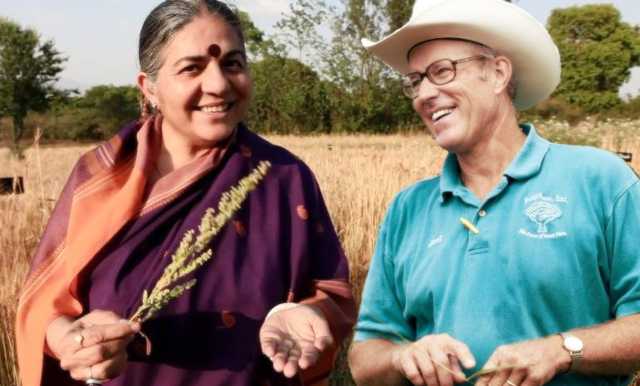
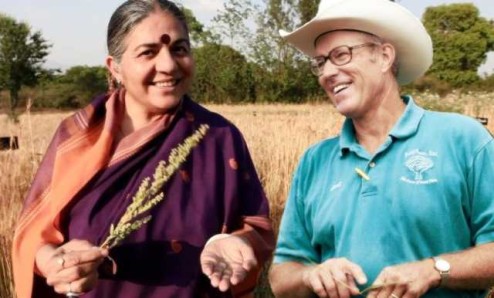
Picture:

With some other idealistic visionaries including Dr Vandana Shiva, winner of the Sydney Peace Prize 2010.

PS:

If you want to follow this blog on facebook, the facebook page is: http://www.facebook.com/#!/pages/Adventures-with-Ideas-Juliet-Bennetts-Blog/108739765813581

Share this article


Rethinking “The Pyramid” – do alternatives exist?

I want to revisit the social, economic and political pyramid I discussed in my last post: Preserving the Pyramid- the Reason Things Are the Way They Are, sharing my evolving thoughts on the question: do alternatives exist?

While it seems overall human civilisations only really know the pyramid, if we think outside the square – could any other shapes work?

When I first considered this question I drew a number of shapes:

Could we operate in a circle, a flat line, a square, a rectangle, a diamond?

“How about a a flatter pyramid?” I asked my friend.

“That’s Communism,” he replied. “It tends to make everyone poor, and just a few mega rich.”

I nodded woefully. Over time I have looked to other sources of inspiration.

In animal kingdoms…

In nature…

In space…

Inside ourselves…

From our minds…


[1]

.

.

.

I think my favourites are 1. THE SPIRAL 2. THE WEB 3. THE HUMAN BODY

Spirals might have interesting usages but probably not in this context. It makes me think of the pyramid on steroids, kinda what we have now – with the rich getting richer and the poor poorer in a manner that is spiraling with no limits.

Webs on the other hand are an interesting idea. Could a political, economic and social structure be more like a web than a pyramid?

Does the World Wide Web already provide a platform for this? Maybe.

When it comes to the organismic shape of the human body, I have to wonder: Do the my body’s organs and cells operate in more of a pyramid organisation structure, with my brain at the top and a hierarchy of body parts below it? Or does the networking of my spine through to the individual nerves throughout my body, the connections between my body and my mind, connections between my heart and veins, between lungs through alveoli and capillaries and through to feed oxygen to the cells in the tips of my fingers- is this more like a web?

Are our brains like pharaohs, monarchs, dictators and bankers, sitting at the top enjoying the work the rest of the body does? Or are our brains, spines, hearts, lungs, nerves and senses showing us a different system? Could our society be modelled on this?


If my foot and my arm squabbled about taking over from my brain, my body wouldn’t function so well. I need my feet to walk, I need my mouth and voice box to talk, just as right now I need my fingers to type. If my stomach goes on strike, my taste buds aren’t going to have much fun. If my hand decides not to feed me, I will die. Similarly if my hand feeds me endless amounts of McDonalds and chocolate – seeking short term pleasures at the cost of long term body functions – I will also die a relatively quick death. Similarly if those up the top of the human pyramid neglect those at the bottom, it won’t take long for the whole pyramid to fall.

While my entire body seems to be an integrated web, when it’s a working system some parts do seem to have more fun than others: I’d rather be a brain than a finger, just as I’d rather be a taste bud than a stomach. I’d prefer to be rich than poor in the capitalist world. But one without the other doesn’t really work. All body parts are happier the more happy/healthy the other parts.

At the end of the day, whether we have a system based on a pyramid or a body,

What I would really like to do is draw a big circle around the pyramid and label it “ecosystem”.

Look at your $1 bill and you will see this symbol is already kind of there…

A pyramid with a circle around it.

The “All-seeing eye” – “a universal symbol representing spiritual sight, inner vision, higher knowledge”, is a Masonic symbol that is a “mystical distortion of the omniscient (all-knowing) Biblical God”[1] which goes back as far as the ancient Egyptian god Horus.

Rather than representing an omniscient God, the all-seeing-eye makes me think of the growing fascist-nature of our governments, and the rich/elite/powerful who control them.

That’s not so bad, in my mind, as long as there is that circle around it which (ironically) is already there on the $1USD note!

I think it is really important  to remember what our social, economical and political model is located inside – an environment with limits.

The great pyramid of human civilisation can outgrow itself and if our Pyramid bursts through this circle there will be no humans left to build another one.

Can the pyramid work within our planetary limits? Maybe. I think it is possible for everyone to live out their lives playing their individual roles that altogether work for the good of all. I think it’s possible for us to have different levels of power and economic wealth, so long as together we create an anatomically correct system – that is, one that fits proportionately within our ecological circle. In order to do this, population must be limited, hence poverty must be limited, the crazy wacky food production lines must be changed (I just watched Food Inc. ewwww!).

If human civilisation is to be a functioning body, we have to re-think the roles and functions of its constituents.

There must be rewards of all the roles and each should be designed to be desirable and fulfilling. Just as unemployment might be depressing, so is living 70-hours a week in a concrete prison in the sky.

I wonder what would the social/economic/political roles look like if we were living within our ecological limits?

Photos/credits

[1] http://www.crossroad.to/Books/symbols1.html

Most from google images – forgetting to take note of owners, although most have their websites on them.

That great photo of the snails is from WAPPY AL – http://www.flickr.com/photos/jackslad/502468776/

Share this article


Protests and balls, another Wikileaks rally (Town Hall 530pm TODAY), and the Left-Right Paradox.

Today the Westminster Magistrates’ Court will decide the fate of Julian Assange, well at least whether or not he will get bail. And so while I haven’t even told you much about last Friday’s rally yet, I had better briefly inform any Sydney readers that there will be another rally at 530pm, again at Town Hall, today. [1]

Professor Emeritus Stuart Rees (from Sydney Peace Foundation, and my friend and mentor) will be speaking,  so if you are Sydney, do come along. It’s sure to be informative, conducive to Assange’s case, as well as a good laugh (if anyone knows Prof. Rees’ humour, you will understand why).

Anyway, returning to the story of the 30 hour Peace vs Defense saga that I began to tell you about yesterday in my entry Protests, Balls, Left and Right.

In one day I attended both the first wikileak rally, and then my friend’s army ball, both held at Sydney’s Town Hall – allowing me to directly access the often polarised worldviews of Peace, and Security, and bringing me to what I will from here on refer to as the Left-Right Paradox.

Although separated by a few hours, I was one of the Lefties outside Town Hall by day, a “Hippy/Communist” as the army boys called us (appologising when I owned up); and lapping up the benefits of our capitalistic security-driven Conservative government (at my friend from the army’s end of year ball), by night.

The rally emphasised the cowardous and inexcusable way our politicians are handling Julian Assange: washing their hands of him and feeding him to the lions den, before proven guilty, is not something any citizen would hope from their country.

You would think they would learn from the case of David Hicks… what happened to being presumed innocent until proven guilty?

The rally also emphasised the citizen right to freedom of speech, freedom of media, and right to the truth.

You have probably gauged from other blog entries the value I place on the “truth” – so as you can imagine, my values were largely aligned with the rally’s speakers.

Later that day I gowned up and entered Town Hall, I also came to understand the other side.

“The information leaked put my friend’s lives at risk.” said my friend who served in Afghanistan earlier this year. “There are bigger questions that have to be asked.”

Gulp.

Let’s consider some of questions:

Should all political information be transparent?

Yes, I would like it to be.

What if this puts lives of Australian soldiers at risk?

Then no, it shouldn’t.

Do the public have a “right to know”?

YES, I think they do.

Do governments have a right to hold some information “confidential”?

Paradoxically YES, I think they do too.

Who should decide what truths should be told, and which should remain hidden?

I guess as a democracy this is the people’s decision, enacted through the government we elect to consider the facts and (hopefully) make decisions like this, hence controlling the information we see, for our own benefit.

While I think Wikileaks is a great resource for accessing the truth of the political, economic and social world we are a part of, in my opinion there are limits to what should be published. Namely nothing that puts the lives of fellow Australians at risk.

What if this puts lives of people from other countries at risk?

It is here we return to the Left-Right Paradox – the dicotomy that positions global peace against national security.

If I prioritise the lives of people from other countries, I can jeopardise the lives of people in my own country. In the political games we presently play, sending our troops to Iraq and Afghanistan and beyond, information is a weapon crucial to our winning or losing the game. So long as we are playing a global game of chess, can we really afford to tell our opponents our next moves?

There are two sides (or more) to every story, and this complicated debate is not going to end any time soon.

There are no easy answers, and there are an endless number of questions:

Are Australia, America, Britain actually democracies, or does the power of the intimate connections between media, politicians, and corporate elites nullify the ideal?

Can the Australian public TRUST their government?

Will the government one day point their finger at someone like me and yell “witch”, just for asking questions?

I hope Australia is a democracy with a government that can be trusted, who respect our questioning and always put the interests and freedoms of their citizens first.

In my opinion, government information should be as transparent as possible and it is nothing but bureaucratic bullshit if the public is held in the dark while institutions we don’t even know about pull the strings.

If I were to discuss this topic with a particularly wealthy and wise friend of mine, his response would be: “It’s all about maintaining The Pyramid.

THE PYRAMID is a very illuminating idea – that all civilisations are based on a pyramid structure, with powerful rich at the top, and the poor workers at the bottom. Connected to the idea of maintaining The Pyramid, is the game of chess that those in power are playing with many other’s lives. So the question we must ask is:

Are we happy being pawns in a giant game of chess, or do we want to change the game, for example, from from chess to sex.

I don’t have the answers but I do have hope – hope that with collective creative ingenuity we humans can write some new rules, and start playing a game where both parties win.

In conclusion I wish to quote one of the army boys from the ball:

“Everyone just has to chill – chill out! Have a beer, talk about their issues, and then the solutions will appear.”

Cheers to that!

Thanks for listening to my rant… I’m sure everyone has an opinion and I’d love to hear your thoughts if you care to leave a comment below.

References

[1] http://antonyloewenstein.com/2010/12/13/sydney-rally-for-wikileaks-on-14-december/

Some links

This entry is continued from – http://www.julietbennett.com/2010/12/13/protests-and-balls-left-and-right/

My older entries on this topic that might be of interest:

Human Rights or a Collective Future – the Problem with Definitions

Am I a Leftist Idealist or Right Conservative, or BOTH?

A balanced article I quite liked – http://www.abc.net.au/unleashed/42140.html

A little video I shot on the day of Lee Rhiannon of the Greens (NSW Senator Elect).

YouTube Preview Image

Wikileaks video and site – http://213.251.145.96/video.html

Share this article


Yoga – always a good decision

Tonight I had a decision to make: dinner with mum, PeaceBeliever Tribute to John Lennon at Oxford Arts Factory, bed (I was up late blogging last night), try to keep awake and study, or go to a yoga class. My body craved the hot room, long stretches, mental relaxation of yoga – but it would be at the cost of all the other options, and the bother of driving and parking. All of this I could be avoided if I just sit on my ass and don’t go. But I did. And I was reminded (once again) that yoga is always a good decision.

I don’t know how I let myself forget – how weeks go by with my prioritising social events or even whatever TV series I’m working through at the time – instead of making it to class.

This class – at Body Mind Life, in Surry Hills – is particularly great. To make things even better, tonight this amazing (and perfect bodied, dreadlocked) yoga dude brought a guitar and he and the female instructor sang some chants.

It is quite an incredible feeling to be in a room full of around 50 people humming “om” together (the vibration of the universe) and singing about “shanti” (which means peace). So I might not have made the Lennon Peace Tribute but I did I return home feeling once again “at peace”.

I had forgotten how great that feeling is.

To be honest I had been starting to wonder if “Peace” was an outdated word – with all the baggage that seems to be attached to it. Peace seemed to bring to mind fairly boring images of nothingness while and Conflict brought to mind images of adventure and excitement. The definition of Peace (or “Positive Peace” to be more exact) in Peace and Conflict Studies is a Peace that values Conflict but not at the expense of Violence or Injustice. So… in the pursuit of Peace by this definition, I was starting to think that maybe we needed a more exciting new term.

After tonight I see Peace differently.

Tonight I am reminded that while we need Conflict to have Peace, we also need Peace to have Conflict. We need BOTH. While Conflict can be great, it does need some moments of Peace to balance it out.

Tonight I feel calm but energised, alive without-a-worry-in-the-world. Feeling at peace with oneself is a very good feeling. So if your life is as fast-changing and competitive as mine then I recommend that an hour or two of pure nothingness (which is not the same as watching a tv show) is always a good decision.

Share this article


Humanity: are we an empathic civilisation???

Something many of us probably do not know is that connected to our drive to survive, is an empathic disposition driving the evolution of “civilisation”. Humans have a long history of empathy that unfortunately our history books tend to forget about. The book The Empathic Civilisation – The Race to Global Consciousness in a World in Crisis, by Jeremy Rifkin, tells another story.

As a commenter on Peace: How Do We Find It? said, “so now all we need to change, is the minds of the entire human population.” That sounds darn right impossible, doesn’t it. It doesn’t sound very promising, nor ethical, BUT if humans are empathic at their core then maybe we don’t have to change people minds – maybe we just have to REMEMBER a part of ourselves we often forget.

Rifkin writes about the change in people’s minds that led to the spread of Christianity around 1500 years ago.

“Cast adrift from their tribal bonds and thrown together with people of different cultures form around the empire, large numbers of individuals suddenly found themselves alone in dense urban environments and without a sense of identity… what was missing was a powerful new narrative that could put every single individual at the center of a compelling cosmic story of creation, tribulation, judgement, and redemption, and, by doing so, recast the very meaning of human existence… it would be a young sect calling itself Christians that would take Rome and the empire by storm with their story.” [1]

This video is not a replacement but it is a brilliant summary of the book:

YouTube Preview Image

Oh and this interview with the Rifkin is pretty cool too:

YouTube Preview Image


It seems to me that while conflict and competition play important (and positive) roles in life processes, if we have an empathic disposition then conflicts don’t need to have violent and destructive consequences.

Could small shift in the way we frame our story? Could books and clips such as this one contain the butterfly effect strong enough to realise our empathy and better the world for each other and future generations?

Or will it be a new cosmic narrative that addresses our own distorted sense of identity?

Rifkin describes three Industrial Revolutions, each based on a developments in energy/communications technologies:

1. coal/print

2. oil/radio-television

3. (maybe) the Internet/alternative energy

In order to avoid “planetary collapse” in the face of “a rapidly accelerating juggernaut” of climate change and proliferation of weapons of mass destruction, (or, if you’re a climate change skeptic, then just exchange those two words for human population which is undeniably ridiculous and out of control) a revolution is necessary.

If this third revolution happens, Ruskin writes that it ‘will be marked by a “distributed” model of energy production (and use) that will rely on the new assumption that human nature is not inherently selfish, but rather that people ‘want to collaborate with others, often freely, for the sheer joy of contributing to the common good.‘[2]

How’s your empathic disposition as we come up to Christmas?

Do you think such a revolution is possible?

I do, but that might be summer and the fact that I just got my first scooter, bringing back my pre-India incurable optimism…

References

[1] The Empathic Civilization - The Race to Global Consciousness in a World in Crisis, by Jeremy Rifkin.

[2] As summed in a review in ONE COUNTRY, Bahai Internationa Community New York, Ed. Brad Pokorny.


Share this article


Jessica Jackley: Poverty, money and love

Just thought I’d share this inspiring story about Jessica Jackley who set up Kiva – the world’s first peer-to-peer online microlending service – which allows people in rich countries to lend small amounts of money directly to people in poor countries, and from this dramatically changing their lives.

YouTube Preview Image

While microfinance is not without criticism, it is nice to see at least the intentions behind it are pure. If I had money I’d lend it though them:

http://www.kiva.org/

Share this article


Peace One Day

Have you heard of Peace Day? It’s the 21st of September, every year. Do you know the story behind it? Peace One Day is the story of one man trying to get the global community to establish the first ever annual day of global ceasefire and non-violence. For five years filmmaker Jeremy Gilley met with heads of states, freedom fighters, innocent victims, media representatives, aid agencies, and Noble Peace Laureates, in a quest for peace for just one day. Narrated by Jude Law.

This is the intro to the film:

YouTube Preview Image

Tomorrow we are screening the film at 10:30am at the Centre for Peace and Conflict Studies, Rm 107, Mackie Building, University of Sydney, Tuesday 21 September 2010. If you’re in Sydney please come along!

Share this article


San Churro, gluttony and my fair trade chocolate question

San Churro, if you don’t know, make the best hot chocolate in the world. The Azteca is full of chili and very thick hot chocolate goodness. A few weeks ago after a session of indulgence, my friend asked me how my drinking chocolate fit into my chocolate slavery morals when it comes to eating chocolate? I hadn’t thought about it. But drinking it, or even cooking with cocoa – it’s all part of the same problem.

So… another letter, and another reply:


Dear Juliet,

Firstly, let me thank you for your enquiry and your concern for cocoa growers is most definitely noted. I want to assure you that we are very aware of the issues in producing cocoa around the world and we are working to bring in Fair Trade certified chocolate from Spain.

I think it is important that I clarify at the outset that we are not actually manufacturers of chocolate but rather importers. We source our chocolate from a boutique manufacturer in mainland Spain. We have been lobbying them to produce a Fair Trade line of chocolate for some time now but, because of their size, and the requirements of certification, it hasn’t been economically viable for them. Unfortunately, Fair Trade is not really as high profile issue in Spain as it is here and the UK. What we have been assured by them though is that they have visited the growers at the farms they purchase their cocoa from and made sure that the working conditions are of a Fair Trade standard.

I know this may sound a little hollow, and if it were coming from a larger company I would be more sceptical, but our CEO has met with the directors personally and they are genuine people and have their heart in the right place. We are endeavouring to get a Fair Trade bar on to our shelves to give people the choice, but there is literally no one in Spain offering this product. We sell ourselves as a Spanish chocolate option, so it’s a big decision for us to get our chocolate from sources outside Spain.

Having met with both Susan Mizrahi, the Head of Human Trafficking for World Vision, and Cameron Neil from Fair Trade Australia we have discussed this issue in great depth. They also understand the difficulty involved in producing this product at a commercially viable price at a standard that is acceptable for our consumer. With Cadbury finally committing to Fair Trade (on Dairy Milk bars), this will undoubtedly draw more attention to the cause and increase the availability of the Fair Trade bean for everyone. With Cadbury becoming part of Kraft foods, Kraft has now become the world’s largest purchaser of cocoa product.

As I touched on before, there is also the issue in finding any suppliers making a product that is of a high enough quality to sell in our shops. Our chocolate is a high grade couverture, the same as used in many top restaurants around the world, and to date we haven’t actually tasted anything Fair Trade that stands up to this. There is a major risk, that if we put an inferior product on our shelves, we would actually put people off the idea of Fair Trade altogether. Fair Trade has been fighting public perception about their quality since its inception and I’m very conscious of doing anything that may harm the brand. Once again, greater availability should also see more quality producers and a rise in standards of product.

Whilst we are actively working behind the scenes to get  these changes through, what I am excited to say is that we will shortly be launching Fair Trade coffee in all our stores. We are aiming to have it rolled out by October/November so all our coffee will be 100% certified Fair Trade. Unlike many other companies that offer it only as an option or not at all, it will be our only choice. Whilst we are a chocolate shop, coffee actually makes up a significant part of our product mix, so I hope you see this as a step in the right direction. We are, as far as we know, the only chain that will be serving solely Fair Trade coffee in our stores.

We are comfortable with our suppliers assurance of their line of supply, and whilst certification would be fantastic, it’s simply not viable immediately with the additional costs and limitation it puts on their production ability. We will continue to lobby and raise awareness of the need for Fair Trade and over the coming months you should start to see some Fair Trade options on our shelves.

Once again, thank you for your email, it’s nice to know that there are consumers that think about what they buy. The more of you we have, the easier it becomes to make change happen.

Best Regards,

KYLIE BROWN

PHONE 03 9641 6888  |  FAX 03 9640 0244
WWW.SANCHURRO.COM
SUITE 103, 425 DOCKLANDS DR, DOCKLANDS, VIC 3008

(Note: I have permission to publish this letter)

The whole fair trade situation really is difficult and complex.

I can’t stand that humans beings are treated so badly for something that I enjoy so much, but I am also aware of how limiting our system is… all we can do is try. I am happy to know the efforts companies like San Churro are making toward fair trade and the cessation of slavery. I think Kylie is right - the more people that become aware of the issues, the easier it will be for real change to occur.

The guilt I’ll feel next time I drink an Azteca will be more to do with the gluttony (there is A LOT of chocolate in one glass) than the slavery behind the beans. I trust the intentions of this company so I will continue to enjoy the luxury I have access to, without guilt but still with continuing concern. And I will continue to work within my means toward the structural changes in our system that may actually address the roots of the problem. As with all endeavors I think it’s important to keep motivated, to encourage one another, to share information, and to enjoy the process as we move (albeit slowly) to a better, fairer world.

Or… am I (like someone commented on another of my chocolate blog entries) being too relaxed about this issue?

Love to hear your thoughts…

Photo: my beautiful mum relaxing with my gluttonous dog Bella.

Share this article


Correction: Lindt DIDN’T lie. We can eat lindt chocolate in peace!

There are two parts to this entry. One that was posted earlier today, which I am redirecting to this one so to ensure I don’t communicate any misleading messages.

Lindt LIED. No more chocolate for me.

While about a year ago I posted the good news that Lindt chocolate was not slave trade chocolate after they responded to my email stating they do not buy beans form the Ivory Coast (see entry Lindt chocolate is NOT slave chocolate)

Now “L.S.”, a reader of this blog entry, has informed me that in fact over a third of their cocoa comes from the Ivory Coast (see the pie chart above which is sourced from here – http://irpages2.equitystory.com/lindt/pdf/Annual_Results_07.pdf)

LINDT

The Ivory Coast is where 90% of the beans are harvested by slave labour – people brought there to work under physical force without pay…

I have replied to Lindt’s last email, attaching the above chart.

Dear Jane
Someone from my blog has brought to my attention to your annual report which says in fact you DO source your cocoa beans from the Ivory Coast. Why did you tell me you didn’t?
Thanks,
Juliet.

Will be interesting to see how they respond…

For now this means my favourite chocolate brand has gone out the window.

I can not enjoy something as great as chocolate when I know the physical violence to the lives of other human beings.

To make matters worse, Aldi has decided to stop stocking the Ecuador single-source chocolate – the only chocolate I figured I could safely buy as all its beans were sourced in Ecuador.

If anyone can tell me where I can get nice dark chocolate without the associated horror – please let me know. It might be radical to give up my favourite food, but right now I can’t enjoy it. Until something happens to stop slave trade, NO MORE CHOCOLATE FOR ME :(

A few hours later, blog entry #2:

Correction: Lindt DIDN’T lie. We can eat Lindt chocolate in peace!

Incredible. I have a reply already!!!

Dear Juliet

I think there is a misunderstanding: The person from your blog has misinterpreted the attached graph referred to. If you look at the graph you will see that it shows the worldwide COCOA production, and has nothing to do with LINDT chocolate production. As a matter of fact, the concerned graph shows that Ivory Coast is the world’s biggest cocoa producer, Ghana the second biggest cocoa country.

We confirm once more that – SINCE 2005 - WE DO NOT PURCHASE OUR AFRICAN COCOA BEANS FROM IVORY COAST BUT FROM GHANA. We would very much appreciate if you could inform your blogger, that he/she is wrong and that such kind of uncorrect information does harm the reputation of our company!

Kind regards

Jane

So there you go. Jane, and Lindt, I apologize for my hasty accusations. Note to self: think, try to gather all details, before you act.

That pie chart from my last entry refers to the sources of cocoa beans worldwide – not Lindt chocolate. It was mine and Lan’s mistake.

As far as I’m aware, while Ghana is right next door, the slavery practices only occur in the Ivory Coast… that’s what a university colleague who is from Ghana told me anyway.

You know what this means? I’m back onto chocolate! (That was a very quick turn around).

I am going to buy a block of Lindt Sea Salt to celebrate!!! (Have you tried it yet? It sounds salt+bitter+sweet – it sounds interesting but it’s taste and texture is GREAT!!!)

FYI Previous email correspondence:


Subject: Cocoa Sourcing AU
Date: Thu, 10 Sep 2009 10:56:54 +0200
From: S@lindt.com
To: julietbennett@hotmail.com


Dear Ms. BennettThank you very much for your request concerning cocoa sourcing. It has been forwarded to us at the Lindt & Sprüngli Headquarters in Switzerland because the very important topic of sustainable cocoa sourcing is committing the whole Lindt & Sprüngli group and not only our 100% subsidiary in Australia.  

In a general way, as far as our sourcing of raw materials for all our group companies is concerned, we kindly ask you to notice the following points:


Lindt & Sprüngli is one of the few chocolate makers that have complete control over every step of the production chain starting with the precise selection of the finest cocoa varieties from the best growing areas in the world right on through the careful and expert processing until ending with the elegant packaging. To safeguard the uniform and consistently high quality of all our chocolate products, all ingredients are thoroughly tested in our own laboratories before and after purchase, so that we can be sure that their quality constantly meets the highest standards.


While cocoa is currently traded at the commodity stock exchanges, superior grade cocoa beans (so called flavor beans or fine grade cocoa), as we utilize to a great extent for the manufacturing of our premium products, are purchased through traders at a substantial premium price over ordinary bulk cocoa. These finest grade cocoa beans (also called “Criollo” cocoa) can only be grown in specific geographical areas (Central and South America, Caribbean Area). While the fine grade cocoa production is a very small part of the world’s supply, it is exactly those (together with the Trinitario cocoa which is also considered as fine grade cocoa) for which Lindt & Sprüngli’s demand is very high. The remaining part of cocoa beans used by our company mainly for fillings, so called “Forastero” cocoa, are not sourced from Ivory Coast where most of the allegations about child labour originate, but from Ghana, where one of the top quality Forastero beans come from and where a premium price is paid for.

Lindt & Sprüngli is extremely concerned about possible practices of child labour and can assure you that we condemn any abusive practices. This is one of the reasons why we do not source cocoa beans from Ivory Coast. Prudent and conscientious relations with the environment and with the communities in which we live and work are important to us and enshrined in our Company Credo. In the procurement of our raw materials, great importance is therefore attached to compliance with the rules of sustainable conduct. This includes respect for social and societal aspects, such as working conditions and incomes of farmers in the growing countries, support and promotion of environmentally friendly production conditions, and payment of fair prices for raw materials which satisfy our stringent quality criteria.


In our opinion and to our regret, the existing fair trade organizations cannot continually supply us with the essential quality or quantities required. That is the reason why we refrain from the purchasing of cocoas from such organizations and look for other means of advocating responsible and sustainable dealings with our most important raw material, cocoa. As a matter of fact, there are many ways to strive for sustainable and responsible cocoa sourcing practices. This can also include individual projects and purchasing methods.


May we in particular bring the following to your attention:


The control of the overall production process from the selection of the best cocoa beans to the ready-packed product is one of the important aspects for the guarantee of the reliable premium quality of LINDT products. Another very valuable aspect is the traceability of the processed cocoa beans. For this purpose Lindt & Sprüngli subscribed to a new sourcing model in Ghana. This new procurement system contains binding guidelines between local cocoa suppliers and Lindt & Sprüngli. Within the framework of this project, Lindt & Sprüngli not only guarantees stable prices for the farmers involved, but also best quality and traceability of cocoa beans sourced in Ghana. Furthermore, Lindt & Sprüngli pays an extra-fee for those beans, which is partly allocated in favour of a foundation in charge of target-oriented social projects, the development of regional infrastructure and the continuous improvement of cocoa quality (www.sourcetrust.org). The projects supported by this foundation will be controlled by an independent, international audit committee. Lindt & Sprüngli is convinced that this purchasing strategy is a crucial prerequisite to better control the buying process of cocoa beans while at the same time countervailing local grievances in producing regions such as child labour. With this self-contained purchasing concept, which will be fully effective from 2009 onwards, Lindt & Sprüngli makes a solid contribution to the promotion of social compatible and to fair economic conditions for the cocoa farmers in Ghana. Based on the first positive results from the Ghana project, Lindt & Sprüngli is considering to extend this purchasing concept to fine-flavour cocoa beans in Latin America.


Moreover, through membership and active participation in local branch associations or international non-profit organizations such as the WORLD COCOA FOUNDATION www.worldcocoafoundation.org we support the underlying idea of sustainable cocoa growing and provide financial contributions to that end. WCF is a partnership between the cocoa-processing industry and government agencies, international associations, trade organizations, and non-Governmental Organizations. The aim of this cooperation is to safeguard stable and secure cocoa supplies. This is done by taking measures to increase revenues and re-duce harvest losses, while also securing income conditions that enable cocoa farmers in Africa, Latin America, and Asia to lead a viable and worthwhile life.


But Lindt & Sprüngli’s commitment in the areas of cocoa production and sustainability is also strengthened by our direct support of other specific projects that bring direct benefits to the countries of origin. With that aim in mind, we support, for example, the Sustainable Tree Crop Program (STCP) in West Africa as well as research projects to secure and develop cocoa cultivation and processing with a view toward the supply of high-quality raw materials.


With a share of around 70% of world cocoa production, West Africa is the key region in this regard. Yields on the cultivation and sale of cocoa are the key to the survival of a high proportion of the local farming population. The STCP was started as a pilot project primarily to improve the cocoa economy, which is based on small farming structures in the West African countries of the Ivory Coast, Ghana, Nigeria and Cameroon. The aim of STCP is to improve the economic and social welfare of small farmers and their communities, accompanied by safeguards for ecological sustainability in agriculture. The main points of action are: promotion of production and distribution of high-quality cocoa, improvement of market access and of the incomes of the small producers, development of environmentally-friendly, socially responsible and economically sustainable systems of cocoa cultivation. The projects concentrate mainly on integrated cultivation and harvest management, control of insect damages, cocoa quality improvement, the development of organizational skills and tools and the awareness of social aspects, such as child labor and diseases like AIDS. This information is passed on to the cocoa farmers primarily at the “Farmer Field Schools”, a participative training and educational scheme.


Support for scientific projects in the area of external applied botanical research is another element in the promotion of a sustainable cocoa economy: Today, the collection of genotypes of the Trinitario plant population, which became known as the “Imperial College Selections”, is among the world’s most important reference collections of genetic cocoa resources. A systematic evaluation of quality features and sensory properties is now being conducted as part of a project of the “Cocoa Research Unit” at the University of the West Indies in Trinidad with a view to future cultivation projects. Lindt & Sprüngli supports this project. The group also participates in further projects concerning applied cocoa research in South America.


It is our hope that the foregoing answers your questions and emphasizes our commitment to help establish sustainable, long-term solutions for cocoa farmers.


Yours sincerely

Jane

______________________________________________

Jane - Corporate Communications
Lindt & Sprüngli (International) AG | Seestrasse 204 | CH-8802 Kilchberg
tel +41 44 716 2456 | fax+41 44 716 2661 | skalin@lindt.com | www.lindt.com


From: Juliet Bennett [mailto:julietbennett@hotmail.com]
Sent: Thursday, 10 September 2009 1:08 PM
To: Customer Service – AU
Subject: Your cocoa


Hello
Simple question from a devoted Lindt customer: where does Lindt get their cocoa beans from? Do any come from the Ivory Coast?
Thanks
Juliet


Note: I’m not sure about defamation laws so I have changed the name of the woman from Lindt who lied to me to Jane, just to be on the safe side.

Share this article


Lindt LIED. No more chocolate for me.

SEE THIS ENTRY, AND IT’S CORRECTION, IN THE NEXT ENTRY

http://www.julietbennett.com/2010/08/18/correction-lindt-didnt-lie-we-can-eat-lindt-chocolate-in-peace/]

Share this article


Nestle’s reply.

Of the emails I sent, Nestle was the first to reply. I didn’t realised that they purchase 11% of the global supply of cocoa-that’s massive! Read their correspondence for yourself below if you wish. While I haven’t heard of UTZ certification, I have to say at least they replied, and the site www.thecocoaplan.com clearly tells me one thing: CORPORATIONS DO HEAR US.

Of course, their care for the consumer comes only relative to the care for the shareholders – who in order to get profit require that the good be sold, but at least the message gets through even if just in part. Yet the question I have to ask is: how do I know that initiatives like this are more than a green-washing-like show. That is, how do I know it’s not all talk? I guess I can’t.

Since my last post my friend also recommended this ABC Four Corners article, that says even Fair Trade products are often not fairtrade – not because the company is being dishonest, but because the farmers and farm owners cheat the system.

http://www.abc.net.au/4corners/content/2010/s2885745.htm

So now I reface the dilemma I faced a couple of years ago when I first saw the full-length documentary on chocolate slavery: can I still enjoy my chocolate if I know it is most likely connected to the physical slavery of africans? No. No I can’t.

I’m not the only one facing dilemmas. The discussion board shows other’s opinions on the matter:

http://www2b.abc.net.au/tmb/Client/Message.aspx?b=37&t=1&ps=20&dm=1&pd=2&am=9002

EG.

“The argument about the use of Fair Trade logos with Coffee and Cocoa trade has been going on for some years now, yet the status quo appears to remain static. In fact, I am surprised that it is taken the ABC this long to show the BBC’s Panarama exposé story on the inertia (or lack thereof) of “Fair Trade”, the organisation and their expoitive and cynical licencing of it’s trademark logo, whose motto should read, ïf you pay us more money, you will feel good”and be seen to be be doing something”. I have listened to both BBC World Service and other radio programmes who have covered the subject of child slavery and Fair Trade over the years and nothing has effectively changed. In fact I have an old VHS tape of a documentary presented by the British comedian, Alexei Sayle that was done some 20 years ago on this subject. I would be prepared to pay more for my coffee & chocolate, but only when I have confidence that the end producer receives those gains, and honours the agreements to produce the raw product fairly, including the cessation of child slave labour… I will remain patient and hopefully optimistic, but sadly, I fear that it may not happen during my remaining lifetime. I have long eshewed the practice of dropping bars of chocolate into my shopping trolley, and I suspect that unless consumers act with their conscience and act accordingly, the confectionary manufacturers will continue to look the other way, rather than act assertively, and will always put up the defence of “meeting their customers’ demands in the marketplace” or that other lame excuse ïf we don’t do it, our competitor’s will)… sad but true.”

And another comment:

My partner and I are feeling very frustrated at the lack of ‘bigger picture’ information provided in the chocolate story.

Whilst there was mention of poverty and even the admission of women who had no choice but to see their sons sold, the reporter didn’t do what was necessary in this story and detail the reality of these people’s existence.

We don’t accept that it’s ok for kids to be used in child labour but in many cases these kids have no better option in life. There isn’t a social security system in these countries – some will either work or starve to death. This side of the story was not detailed and these root issues are the real problem – not so much the actual kids or the people who’re bringing the kids to the farms.

In regards to Fair Trade, yes some truths were revealed however what about the issues around Fair Trade – like that only the richer farmers have the ability to get the fair trade certification and thus the cycle of poverty is exasperated - the rich get richer and the poor poorer.

I feel rather angry overall that this story was presented very much through Western eyes with Western standards. Asking the working kids ‘do you go to school’ as if that is our standard of whether something is ok or not. There are many millions of children in the world who do not have the privilege of attending school and this is a result of poverty. There needs to be an appreciation of the reality of the situation and that attending school for many is simply not an option, regardless of work.

It sucks… and it’s really difficult to evaluate. And like all forms of horrible structural violence, one feels hopeless in knowing what to do. One more comment from the ABC message board:

I fear there’s little anyone can do about child labour while corrupt governments hold sway in Ghana and Ivory Coast. What can we in Australia do to stop poverty in Africa? All strength to organisations like Fair Trade. Does anyone have any more ideas on what we can do from here in our comfortable country?

Hmmm Aldi has chocolate with single origin beans – Ecuador doesn’t use slave trade, does it?


NESTLE’S REPLY:

Hi Juliet,

Thank you for sharing your concerns about the cocoa we purchase.

In Australia and New Zealand, Nestle has been working to ensure a reliable supply of independently certified cocoa from West Africa, in the quality and quantity we need to use in the manufacture of our chocolate.  We have now received the first shipments of UTZ certified cocoa into our factory at Campbellfield in Victoria and the first Kit Kat 4 Finger bars carrying the UTZ Certified label will be in store from later this year. UTZ Certified is a leading certification program similar to other programs such as Rainforest Alliance and Fair Trade.

Please find attached some more detailed information about Nestle and the cocoa we purchase, and if you would like further information please visit our website www.thecocoaplan.com.

We thank you again for your contact.

ATTACHMENT:

Like you, we believe that cocoa must be grown responsibly and children must not be harmed. We purchase 11% of the global cocoa supply – a significant part of which is from West Africa. Therefore, we recognise that we must be exemplary in our actions supporting the cocoa industry.

Cocoa farmers in West Africa are battling aging, diseased plants and a lack of understanding of sustainable farming practices.  In Côte d’Ivoire in particular there has been a history of political instability and the communities are very poor. It is normal in this environment for children to assist on the family cocoa plantation, as is the case in many other cultures. What is not acceptable is when children are forced against their will, are working in unsafe conditions or are not receiving adequate education as a result

So to help address the key economic, social and environmental issues facing the cocoa farming communities we work with, we have developed The Cocoa Plan.

The Cocoa Plan www.thecocoaplan.com brings together Nestlé’s activity to promote sustainable cocoa supply under one banner.  Over the next ten years we will invest globally AUD$113 million in the Plan.  This builds on the AUD$56 million invested in cocoa sustainability initiatives over the last 15 years.

The aim is to achieve higher quality and better supply of cocoa beans while making a positive difference in the lives of farmers, their families, communities and the cocoa industry.  Importantly this plan is being developed in partnership with local communities, government and NGO’s who understand what will make a difference in the long term.

Whilst the Cocoa Plan is principally focused on Côte d’Ivoire, it also covers other global cocoa sourcing regions as we have significant agricultural programmes in Ecuador and Venezuela and a developing program in Indonesia.   Below are some of our commitments:

Helping Farmers:

  • Financing Farmer Field School training (directly and as part of wider industry programmes) for improved cocoa farming practices and yields.

Nurturing a long term sustainable future – we have recently opened a Research and Development Centre in Abidjan, Côte d’Ivoire, complementing our facility at Tours in France from where we can provide cocoa farmers with a million higher-yielding, stronger, cocoa trees each year from 2012.  Some details:

  • We are also training plant scientists in other cocoa producing countries, such as Ecuador and Indonesia in accelerated cocoa trees propagation
  • We work directly with cocoa cooperatives to help them and their farmers be more competitive and pay a premium for their higher quality cocoa
  • Providing higher yielding stronger cocoa trees has a direct effect on the quality, yield and sustainability of farmers’ crops, and in turn their income and quality of their life.

The Cocoa Journey

  • We’re reducing the complexity of the supply chain and speeding up the processing of raw cocoa beans from the farm to export by helping cooperatives directly

Better Social Conditions

  • As part of the International Cocoa Initiative (ICI), we want to help ensure that children in cocoa growing communities are not exploited and have access to education
  • Through partnerships such as with the Red Cross, we aim to deliver improvements in access to water and improved sanitation

Working with partners to improve social conditions and income

  • In order to encourage safe and sustainable agricultural practices, Nestlé is a founding member of UTZ Certified Cocoa which aims to develop a large scale cocoa certification system
  • We partner and assist government organisations such as the CNRA (Centre National Ivoirien de Recherche Agronomique), the partly state funded Ivorian Agricultural Research Centre that works on research in Côte d’Ivoire to improve the sustainability of cocoa farming

Our plan is clear with a “step by step” approach centred on our tree propagation programme, farmer assistance structure and the relationship with cooperatives.

In Australia and New Zealand, we have been working to ensure a reliable supply of independently certified cocoa from West Africa, in the quality and quantity we need to use in the manufacture of our chocolate.  We have now received the first shipments of UTZ certified cocoa into our factory in Victoria and the first Kit Kat 4 Finger bars carrying the UTZ Certified label will be in store later this year. UTZ Certified is a leading certification program similar to other programs such as Rainforest Alliance and Fair Trade.

If you would like further information please visit our website www.thecocoaplan.com

Picture:

Africa. No time to be more creative. And there’s no chocolate in my house (not in protest (at least not yet in protest) but because I buy it, and I eat it within a night. I’m an addict. That’s why I’m so passionate about this topic).

Share this article


Chocolate slavery and the tragic flaw of humanity in the 21st century

Didn’t they abolish slavery a couple of hundred years ago? Well no – it continues… and it continues such to provide the “haves” with what (in my opinion) is the most delicious tasting delightful experience of all my being: chocolate.

YouTube Preview Image

In my opinion there is NOTHING worse than physical slavery and nothing better than chocolate, and so I face the greatest polarity in my world: the best and worse wrapped into a block of bitter sweetness.

Can you believe that in today’s day and age some humans are deceiving other humans into leaving their homes, friends and family, imposing work on them by force (including whips), and without payment? I guess sexual slavery is worse than chocolate slavery, but in my opinion neither forms of slavery should be happening in the 21st century.

Why is slavery allowed to exist? It’s quite simple. It’s all because of the stock market.

The stock market? Yes. Because through the stock exchange responsibility for the consequences of a company’s actions are diffused.

This brings me to what I see to be the tragic flaw of human society in the 21st century: the rules of this game we call business. The first thing I learned at UTS when doing my Bachelor of Business was:

1. Investors invest in shares to make profit on their investment. Many investors live off these rewards, and don’t have to work. Many other people have jobs as intermediaries, buying and selling paper, to make profit from paper. People are making money without adding any physical value to the world.

2. CEOs have one most-important responsibility: to make profits for shareholders. For this he or she receives generous financial rewards, even if it involves decreasing the quality of the product for customers, decreasing the pay or conditions for employees, or destroying the planet.

While shareholders most likely value the needs of fellow and future humans and life on earth, the rules of the game dictate that money invested into shares is done to receive that profit.

There is clearly a disconnection between shareholders and the non-monetary outcomes of their investment. Is this a connection we really want to own up to?

I have some shares, (although I think they aren’t worth anything anymore after the stock market collapsed)…  I also have a little money in the bank and a little superannuation, so let’s take the scenario that all of this is actually a great investment of my time, and is something I am relying on for my future – would I really want these shares to earn less money?  No, of course not. With the rules as they stand, I would want my shares to earn as much as they can or else I would invest my money somewhere else.

I have friends (mainly from my business degree) who work in finance. Would I really want to put my friends out of a job? No. No I wouldn’t. What if the consequence of their jobs, earning lots of money from trading paper, are part of the cause of the poverty of people producing the physical goods we enjoy? I still choose my friends over these people I don’t know.

What if the result of my shares and their finance jobs is human slavery? That is where I draw a thick black line.

That’s where I say to my friend that the unhappiness they are causing is not worth the happiness they gain. That’s where I remind my friend that there’s more to life than the long hours they work in front of a computer playing with numbers. Money isn’t everything. That’s where I advise my friend to get rid of their mortgage, quit their job, and live off their savings for the rest of their life in South America. If only it was that easy… it could be, although my friend may not agree.

The present state of affairs is not a pretty one. Changing the system might be messy, it might be hard for some to deal with. The truth may hurt, but it hurts more if laid untold.

This connection between Shareholders, CEOs, Employees and Customers already exists of course, however, it is hidden behind the guise of “The Corporation”. Whoever was the man (I’m pretty sure it would have been a male) who created and legalised corporations to be treated as their own separate entities, with their own identities, privileges and liabilities separate from their members – should be held accountable for the destruction this single rule has caused for the world’s present and future. Whoever has power to change this law… well, I plead that you do – for the sake of your children.

People are working on solutions. I guess part of the solution is to report to shareholders on the “3 P’s” : Profit, People and Planet - of course, this is easier said than done given the problematic nature of measuring one’s impact on the lives of people or the conditions of the planet. At the very least, even without this reporting structure, surely the rules of the game should reflect the wider values of society?

I guess this would involve:

1. Holding shareholders responsible for the non-monetary consequences of their investment. Eg if you invest in a company that buys their chocolate beans on the stock exchange, a third which come from the Ivory Coast of which 90% involve slave labour, you should feel responsible for this. Also, if the company you have money invested in spills oil in the ocean, you should feel responsible for all the fish, dolphins and animals that die as a result of your investment. Maybe it should go further than “feeling responsible” – if warned and company procedures are not changed, investors should feel obligated to withdraw their investment, or else suffer the legal consequences of the inhuman violence their money is causing.

2. Holding CEOs responsible for the non-monetary aspects of the company they are in charge of. At the very least, the company’s impact on people and the planet needs to be recognised as just as important, if not more important, than profit for shareholders.

The thing is, would this work? Would it make a difference?

It could end up just like the greenwashing that so many companies are into today (making out they are good for the environment when they are still the same product in the same plastic packaging, or donating a dollar and saying they are helping fix the problem). Still, even if it’s only in words I guess you have to start somewhere.

Anyway today I got off my ass and did something tangible about these thoughts. I sent the following letter to a few more of the places where I have indulged in chocolate without knowing whether or not this chocolate comes from the slave farms:

1. Max Brenner (who make incredible waffles)

2. San Churro (who make the best hot chocolates I’ve ever tasted – with chilli!)

3. Nestle (just because I haven’t sent them a letter in a while)

Also I looked at Cadbury: http://www.cadburyfairtrade.com.au/FAQs/FairtradeFAQs.aspx At least they seem to be trying.


If you feel like sending whoever your favourite chocolate companies are a letter, feel free to use my wording:

Dear Max Brenner,

I am a very big fan of your hot chocolates, and your extremely delicious chocolate covered waffles.

Unfortunately I recently saw a chocolate documentary exposing the slavery practices behind the cocoa bean industry on the Ivory Coast. And so I now I simply cannot justify buying chocolate from companies who buy their cocoa beans from the stock exchange (as these are most likely connected to the horrific slavery, which I believe should NOT be allowed in today’s day and age).

I am reviewing my favourite chocolate companies for my blog, so can you please tell me where you get your beans?

Are you moving toward some kind of a fair trade supply chain?

Thank you in advance for your time in replying to this email.

Sincerely,

Juliet.

Anyway, I’ll let you know if I hear back from any of them. If you have any thoughts on how the roles of The Corporation, The Shareholder and The CEO might be better defined, write a comment for me – or if you don’t agree with what I say at all… either way I’d love to hear your thoughts.

Photo:

My gorgeous sisters and cousins indulging in chocolate fondue Bennett-style. I think it was fairtrade chocolate, I hope…

Share this article


Lifting the blinds, and curing PISD

My PISD – my Post-India Stress Disorder – has been cured!!! Well, at least for the most part, for now.

This post concludes over a month’s worth of writings on re-adjusting to life in Sydney post India’s turning my worldview up-side-down experience. I feel more humble – with a clearer understanding just how much I don’t know and how much I will probably never know. I realise that while I can make a positive impact on the state of our present and future worlds, there is no one-size-fits-all solution.

I think have used my writing on this blog as a form of therapy to deal with what I saw to be massive issues : population, inequality, capitalism, and our global ecological crisis.

Out of this I have come to an understanding of my Capitalistic cynicism and my World Peace idealism, and I feel good about that.

I have come to realise that while I’ll always search for The Truth and strive to live The Truth, my truth will probably always be different from your truth, and that’s okay. No matter how similar or different our perceptions of Truth are, the best thing we can do is accept each other person’s right to that perception and not want to change it. No one’s perception is ever static anyway – The Truth, or at least one’s perception of The Truth, is a constantly changing conception.

Similar to this unobtainable truth, while “World Peace” appears to be further out of reach than ever before, I think it is still a worthwhile objective.

Never say never, and never say forever.

Peace may be possible, but as soon as it is reached it will surely disappear. This is the Yin and Yang. The Way of the universe. The way of my own mind, body and soul. The rollercoaster – that is life.

Life may seem more harsh from this perspective, but it also seems more authentic. And I’m ready for it. While fantasy and idealims are fun, at least for the moment I want something real.

George Carlin and Bill Hicks tell it like it is:

YouTube Preview Image

I guess now that I see both sides, and glimpse the dynamics that lay beyond, I just have to shrug my shoulders and say – peace may be an absolutely impossible objective but, like the pursuit for an unattainable Truth, I can enjoy the process of striving for it. While I’m sure these experiences and reflections will influence the rest my life, I’m now well and truly ready to start something new.

Share this article


Human rights or a collective future? The problem with definitions.

If the pursuit of peace is an attempt to rid the world of violence, we must ask ourselves – “violence” through the eyes of who? Defining violence from the perception of a collective-humanity, is very different form defining it from the perception of each individual:

- If we define violence from the perception of all-humans-together, then are we not opening the doors for evil dictator, idealistic warfare and other devastating forms of violence to be committed on individuals?

- But, if we define violence as purely from an individual perspective, eg broaching on a woman’s right to have as many children as she pleases, then are we not lending ourselves to neglect the big-picture?

If we prioritise individual human rights over the rights of all life collectively, might we not cause the greatest violence of all - the destruction of our planet - a violence against all humans and life of today and the future???

Oh woe woe: what confusion, what a predicament, what a trade off…

Does this mean peace is a vain pursuit? An idealist impossibility? An unattainable objective? Maybe.

But is, like the quest for Truth and Balance, the process of pursuing peace still a valuable one?

The last couple of years I have studied “Peace And Conflict Studies”, and while this has influenced many of my entries, I think it might be useful to outline some of the key terms and concepts. I guess where the idea of peace gets airy fairy is in it’s definition… what exactly are we talking about when we talk of “peace”?

First I wish to clarify that peace is NOT the absence of conflict.

Life is defined by dualisms, by the dynamic relationships between opposing forces, by conflict. Conflict leads to evolution, to growth, innovation and improvement. Conflict is good. Violence, however, is not. And violence need not be a part or a result of conflict.

Professor Galtung defines two categories of peace:

- Negative Peace - the elimination of war; and

- Positive Peace - the elimination of poverty and other forms of violence including Direct Violence (eg stop me from hitting you) and Indirect Violence (eg stop me from constraining your freedoms) and Structural Violence (a form of indirect violence that is concealed by a system structure).

Peace involves the resolution of conflict through non-violent means - something I think our schools could do better providing us the skills to put into practice. For example, the learning conflict resolution skills such as how to map out a conflict :

  • how to define the central issue (in a blame-free language)
  • identify the manifest and un-manifest pressures
  • distinguish transitory interests from cultural values and unchanging needs
  • as well as identifying the fears and concerns of the parties involved,

This framework allows common visions and strategies to be designed in a far more efficient and effective way. (See Burton (1990) and Tillet (1999) if you are interested in learning more.

Positive Peace is about JUSTICE

Which brings me back to the problem with words and definition.

Whose justice are we talking about?

My idea of justice, or yours? What kind of justice? Economic? Social? Intellectual? All of the above? The problem with a definition like this is that my idea of justice might very well be your idea of oppression. Our means of evaluating is relative to our culture, education, and experience.

And I start to wonder: is the predicament between human rights and planetary rights, anything like the difference between capitalist mentalities and communist ones? How is can it be I feel I empathise with both?


What do YOU think?

Should we prioritise human rights at the expense of planetary ones?

What is more important, our individual present or our collective future?

Give me a shorter more fulfilling life over a long drawn out crappy one - in my mind quality trumps quantity, and planetary rights trump human ones – but maybe that’s just me.

References:

Barash, D.P. (1991) “The Meaning of Peace” & “The Debate Over Peace Studies” in Introduction to Peace Studies. Belmont, California: Wadsworth Publishing.

Burton, J. (1990a). Human Needs Theory. Conflict: Resolution and Prevention. Macmillan. London, UK.

Galtung, J. (2000). TRANSCEND: 40 Years, 40 Conflicts. Searching for Peace: The Road to TRANSCEND. J. J. Galtung, C G. London, Pluto Press.

Tillett, G. and B. French (2006). Conflict and its Resolution. Resolving Conflict: A Practical Approach Melbourne, Oxford University Press. 3rd edn.

Photo:

A pile of rubbish in Kathmandu, Nepal. While the west buries their rubbish in the ground or out at sea, to me this site (and even more so the wretched smell) was a stark reminder of humanity’s impact. It was seriously grotesque, and if it’s avoidable I think it should be avoided.


Share this article


Population Vs. luxury… QUALITY OR QUANTITY?

“On the technical side there is no limit to population,” said a scholar after talking about solving world hunger. “We just need more efficient systems, and for the rich to eat less.” This may be true, BUT the greater question (in my opinion) is: Do we want more people living “simply” in a crowded place, or less people living lives of luxury?

“The population of the poor isn’t the problem,” so the idealists (like I used to be) say… “We actually need less white people.”

Given the ecological footprint of the one billion in rich industrialised countries compared to the six billion in non-industrial countries, this statement speaks some truth. But I’m not so sure that decreasing the population of white people will solve our ecological predicament.

I realise the basic solution is suggested to be the connection between income, education and birthrates. The more money people have, the more educated people get, the less children women want… and this will (somehow magically) stop the population at around 10 billion… but will it?

Just because a majority of white people have chosen to have less children as they get richer, largely because we have fallen for consumerist ideals and the economic slave system that supports this, does not mean that people in other cultures are going to respond to wealth in the same way. I’m not an anthropologist but it seems rather presumptuous to think we can understand people of other cultures, and predict how these people will react to education and money.

In the last two hundred years we have allowed one billion people to be become almost seven billion, and almost six of those billion have not been educated or had money. What will they do when they are educated or have money? In China as they get more money, they build more, buy more cars and have more children, not less of them.

“Human rights are meaningless without ecological rights,” said another one of the speakers. This seems to be getting closer to the real issue. Surely there are limits??? EVENTUALLY, when the planet has 5 billion, or 50 billion, there’s going to have to be some sort of population controls implemented – so why not be proactive and do it NOW, before there are even more ridiculous numbers of us?

How? I don’t know… I guess through some kind of recognition of collective responsibility and gaining momentum in a collective desire to make the world the place we want it to be. Should that involve some legalities that compromise individualistic human rights? In my opinion, yes. I think the future of life-on-earth as a whole is more important than us as individual humans having a right to choose the number of children we are going to have.

What do you think?

What’s more important: quality of life, or quantity of lives?


Share this article


Greed: the JOY of having more than you need… Taoism and more about that frickin elephant.

I used to think we could all be less greedy – that if we wanted less “stuff” we would be happier, and some of that wealth would be shared with the poor. Apparently this simple shift has the power to end world hunger – the rich do with less, so the poor can have more. More recently I have realised that when I contemplate greed I have been wondering if it is actually a human problem that we have the ability to change? Or is greed simple a part of all life’s struggle to survive?

In a universe that (at least at present) is constantly expanding, getting more and more complex, and consuming more and more space, could greed be a universal constant? Is greed embedded in our DNA?

Check out the monkey who found a bag of food in India…

YouTube Preview Image

Maybe greed is so deep in our nature, it’s not something that can be fought? Maybe we humans are just greedy monkeys, so we just have to accept ourselves and allow greed to be?

If we accept greed, and hence accept that humans will always want more and better, should we give up on dealing with this elephant? While reading a book on religions in Nepal, I noted a Taoist teaching: “DO NOT QUIT”. So let us take their advice, and continue.

Also in Nepal, I met some travelers who were happily living a nomadic non-attached way of life.

“Money will come when, and if, I need it,” the cool collected hippy explained. She had been traveling for over 15 years or more, living on nothing yet living in abundance. “When you are traveling cheap you really don’t need much.” At $3 a roof over your head, and $2 for a massive meal, you are talking $1500 a year, so if you spent a few years working to save up $100,000 you could retire for life. We really don’t need much to survive. Especially if, like this hippy’s neighbor, you paraglide from place to place! Now that’s seriously  “following the wind”. And no footprint whatsoever.

“Desire nothing, enjoy everything.I think there is something in this Buddhist-approach to life – I definitely prefer life when I’m not fussing over money.

But how about non-attachment to other things? Do we really want to give up our desires?

Isn’t some attachment is what life is all about? Isn’t it the desire for something we don’t have, what keeps us going?

Be it attachment to people you love, attachment to a job you enjoy, attachment to a computer that carries hours upon hours worth of writing on it, or attachment to life itself, I’m not so sure I want to let that part of life go… There is something to be said for life’s dynamism – for the highs and lows, for the enjoyment that comes from pain and fear that adjoins attachment – it keeps things interesting. A life lived completely without attachment may contain no suffering, but it also (in my opinion) doesn’t contain much joy.

Of this book on religion the Taoist philosophies really resonated with me, mainly because Taoism values the opposites, the ups and downs, the yin and yang, rather than wishing them away. Taoists describe“Ziran” – state of “self-so” which means living in a state of being that ‘allows things and circumstances to unfold’. I really like this idea – connecting to everything, and allowing the most desirable scenarios manifest in reality.

Taoists describe the universe as our body, and the universe our nature; and they recommend we ‘keep in mind both the manifested and the unrevealed sides of the ultimate reality’ – I like these ideas too. We know the many things we know, but we must never forget there is SO SO SOOOO MUCH THAT WE DO NOT, AND CANNOT KNOW.

According to the Taoists, ‘The Way” is found in balance, in knowing what is enough – and they say that learning to say “enough” is achieved through an ‘intuitive observation of oneself and the universe’.

Coming back to my question from yesterday: can Buddha help us deal with the elephant in the room? Can finding inner peace help us do something about the population problem? I guess feeling peaceful inside ourselves can open the channels to creative solutions (like that magic biodegradable bag they put my underwear in), so I wonder, if we combine this with the idea of learning how to say “enough”, can we start to shrink the elephant?

References on Taoism:

Bede Bidlock, Why I am a believer – edited by Aruino Sharma (2007) p.200.

Share this article


Envisioning the future of humanity-on-earth

While in a recent entry I concluded that I simply need to accept the world as it is, today I wonder, does this mean accepting the projectory of the world’s future? If we have the foresight to see that the present path we are on has the potential to destroy humanity-on-earth, do we have a responsibility to pave a new path?

I think yes, we do.

I think that what Deepak is saying is that the uncovering of a new path begins with an acceptance of the past – an acceptance of the inequalities exist today – and an awareness of our culturally conditions definitions of good and bad. That’s where it starts. Accept the world as it is, for now.

Then, and only then, can we begin to predict possible futures and work toward the most desirable one. And so I ponder: what does a desirable future look like? And what kind of path might take us there?

Before I went to India I wrote an entry that talked about the “Changing the Dream” initiative, that looked at how we can to redefine our values and the place of money in our life ambitions. (Click here to revisit entry: “Where are we, where are we going, and how.“). This entry and this initiative still stand strong. It’s the motivation behind this, for me, which has changed.

While I have returned with a far less idealistic perspective, I have not lost my optimism altogether. I have lost my altruism. I have a more realistic optimism and and more self-centred motivation julietnow.

Capitalism has many points that can be improved upon. The perception of people as resources, commodities to be profited from, and earth as here for our exploitation and destruction, are two components that not good for any body’s conscience, or any body’s future.

Physical, sexual and mental slavery (of people at all economic levels), war, poverty, over-population, unhappiness, loneliness, and lives run by an obsessions with money, are also elements of capitalism that I believe can and need to be to be addressed.

How? How can such things be addressed? Are they embedded in the capitalistic model? Do we need a new model or can we adjust our current one?

My favourite professor Johan Galtung, who I met and chatted with at the International Peace Research Association conference last week, takes what I believe to be the best approach to conflict resolution I’ve ever heard of. It’s called the TRANSCEND model, and it can be applied to anything. It involves deeply exploring the roots of the problems,separating the conflicting people from the conflicting goals, and then thinking creatively about a solution that neither parties have thought about, but which transcends the conflict in it’s entirety.

It all starts with a vision.

Solutions to the world’s problems requires us to imagine what we WANT the world to look like:

What long-term vision to we have for humanity on this planet? How many people live in each country? Do we still have “countries” and “passports” or are we free to be citizens of the planet? What kind of diversity still exists between our races? What do we do for fun? Do we still work? Have a career? What place does technology have in our lives? Do we still use money? Still many currencies or just a few? Do we care about owning houses and shares? Does the share market still exist? How do we express our creativity? How many rainforests have survived? Do we have enough water? How clean is our air? What do we eat? How do we interact with each other?

The post-India me is still interested in the future. A realistic future. An amazing future. And to get there we need that vision. The new paradigm I see the word through is dreaming of a better world, one that lies in our own personal interests, and one that doesn’t seem completely impossible.

Picture:

A possible future that is “Beyond Poverty, Politics & War” might be The Venus Project - www.thevenusproject.com – Designs by Jacque Fresco – Models and photos by Jacque Fresco & Roxanne Meadows.

Share this article


Good, bad and the thinking that makes it so

Looks can be deceiving. So can words. Reality itself can be deceiving. Distinguishing deception from truth begins with accepting it is there.

Let’s begin with a funny story behind this photo, one that provides a nice little introduction to more reflections that came from my little Indian adventures.

This photo is the after-effects of a cockroach in my bathroom, a roach I tried to kill. As karma would have it I lost a bottle of my favourite red nail polish in the process, and I still didn’t get the roach.

Then an image flashed before my eyes: I remembered seeing a lady was making my bed in Nepal come across a massive spider in the sheets (that must have been sitting in a store room for far too long, but that’s beside the point). Instead of screaming and squashing it with a boot, like I usually do, she scooped up the eight-legged freak with both her hands and took it out to the garden and let it go…

I looked back at the roach – maybe he didn’t have to die.

“You are an insect, and I, a human,” I told him, “I don’t need to be scared of you. Here boy, come on, come with me…” I willed it calmly, picking up the tube of moisturiser it was hiding behind in my cupboard. He clung to it, like a child being saved from drowning by a life-saver ring. When I got him to the window he flew away.

Only this blood-like stain on my wall remained, as if to signify what could have happened and what was avoided. Things aren’t always as they seem, and when a situation is viewed from a different set of eyes, that sees through the constructs of a different set of language, education and experience, a picture can tell a completely different story. Its the thinking which makes it so.


The greatest irony of all my reflections on global poverty has been the realisation that many of the “poor” Indian women perceive ME as the poor one.

“No husband? No children? It’s okay, one day,” they said with sympathetic eyes. Little do they know that my parents have divorced – that’s the biggest no no in the book, something that (if I were an Indian woman) would prevent any Indian man from ever wanting to marry me. All the things they value I lack. When you look at the world through their eyes, and evaluate the haves and have-nots according to their values, you have to ask: who’s the one living in “poverty” now?

As you could probably tell in my last few posts, in my current state of mind, my care for the “poor” people is presently being replaced with a new appreciation for Western culture, individualism, freedom, and even a new appreciation for what I previously perceived to be the “big bad global capitalist system”. The world situation is far more complex than I realised and, in comparison to the caste system, life in the capitalist system simply ain’t that bad. At least not for me. As capitalists we admittedly are currently using the global situation to our advantage, but I’m no longer convinced we are creating it.

Inequality is so widespread, can anything actually be done to make it more equal? Whenever people set out to do good, it ends up turning into new ideologies and creating new cycles of violence… I’m starting to wonder, is there’s any point in trying? And, more importantly, I wonder if I even have a right to try to make what I perceive to be “positive” changes? What if the changes aren’t seen as positive in the mind of the receiver of my goodwill?

One thing that for sure India has taught me is how little I know, and, how conditioned my own mind is to my worldview and my way of life. Everything I think, say, write, and do, is limited by my language, shaped by my education, and inseparable from my life experiences. And then, make things even more complicated, my worldview is constantly changing.

Every person’s worldview is constantly changing. It makes sense consider the world is constantly in a state of change. Our centric view of life sometimes makes us think that our personal worldview is the only worldview, but it’s not. I have to remind myself that my constantly changing worldview is but one in 7-billion constantly changing views. I have agency over nothing more than my own values and perspectives, and the changes that take place inside me. I can share what I learn but outside that it is each to their own.

Back on Planet Paradise – where horns don’t beep, where teeth are brushed with tap water, and where you walk down the street without a thousand pairs of gawking eyes staring you down – it has been almost surreal to sit in my quiet little apartment and read my diary entries from the last five weeks.

It’s hard to imagine such a polar-opposite culture is in full swing just a 14-hour flight away.Just imagine what my life would be like had I been born in India! For a start, at almost 28-years old, I would probably have been married for half my life and seemingly content with whatever husband my family chose for me. I would probably have a few children by now, and be working in whatever job had been delegated to me, most likely following in my mother’s footsteps. Instead I am happily unmarried, childless, free – free to explore my passions, free to travel, free to spend time with who I want, when I want, to learn, grow, discover – and excited to contemplate the endless possibilities the future may hold.

It is hard for a person who believes making and managing a big family is the most important thing in the world to comprehend why a 27- year-old would choose not to. Why would someone want to travel and study and do the things they are passionate about rather than dedicating their life to populating this planet with more people? Everything is relative to one’s own definition of identity and values. As Shakespeare said, “There’s nothing either good nor bad – but thinking makes it so.”

We have no way to conceive what is outside our worldview. We are entirely limited by the constructs we program into our human minds. The perceived value of one’s life is embedded in our understanding of what is worthy and what isn’t, and of our own status relative to others. We cannot know what we do not know we don’t know. No one who has not tasted the smooth orgasmic goodness of Lindts dark chilli chocolate, will never crave it.

Does this bring us to post-modern nihilism? Is everything relative and nothing absolute? Is it impossible to define good and bad? I still like the Shantaram definition: good is what supports the increasing complexity of the universe, while bad/evil is anything that stands in the way of it. Or, how it translates more simply in my own mind: good is that which creates, and bad is that which destroys. The most interesting thing about this dynamic is that: one CANNOT exist without the other. In order to create, we must be able to destroy.

The universe is expanding, and one day, if something always existed, it seems logical to assume that one day it will contract.

I think it was Neil Diamond Walsh in Conversations with God who equated this process to “God” breathing out in the expansion stage, and then breathing in again in the contraction. Who are we to stand back and judge one a breath out as better than the breath in? Maybe we should just observe it, enjoy it for what it is and be happy we are a part of it.

Back to the worldviews of these Indian women and me: I think they’re poor, and they think I’m poor, so what can one do? Should I try to help them, and should they try to help me? What good would that do when we speak such different languages (I’m not referring to the Hindi/English barriers)??? Worldview conflicts are tough, but there’s no real violence that is resulting from this particular one – it’s just different groups of people valuing different things and living in different ways.

Who is one to think they are right and that they have a responsibility to make the other see the world in their way? I guess there are ways we in which can learn from each others drastically different cultures, but ultimately it seems to me that this the best solution comes back to the simple affirmation that Deepak Choprah comforted me with through my headset as I traveled up the dangerous mountainside toward my Ayurveda Retreat in Coonoor: ACCEPT THE WORLD, JUST AS IT IS.

Share this article