Adventures with Ideas: Truth, Beauty, and the Paradoxes of Life.

Truth

PROTECT IP / SOPA Act Breaks the Internet

On Jan 24th the US senate will vote on the PROTECT IP / SOPA Act:

YouTube Preview Image

Today, on the Jan 18th, my site will join hundreds/thousands of sites in a blackout strike from 8am-8pm to encourage people to sign the petition against such censoring of the internet.

There’s different petitions for people from different places if you scroll down on this website:

http://americancensorship.org/

Share this article


New Moon Wishes on Xmas Eve

Have you ever not known what to wish for? Last night, the 24th of December 2011, was a new moon. Making wishes on a new moon is a tradition for me that started with two friends in Sydney right before we travelled to South America. We wrote a list of dreams, looked up at the stars and asked the universe to bring them to us. Everything on our list came true, well, almost.

Apparently on a new moon, or as a new moon grows to a full moon, the universe’s energy is the best for making wishes. It seems even more significant to make these wishes on an evening that so many people are celebrating the Winter/Summer Solstice (depending where you are) and the religious and cultural traditions adjoined to it.

Yet for a brief moment last night I couldn’t think what to wish for. I asked myself why? I concluded it might be due to a resent mellow acceptance of The Universe. She has more power than I. She is the player, I but a pawn.

If I can slit my wrist on a table after teaching zumba, be in the front seat of a car when it crashes, and fall from a scooter going down a straight road with no bumps, I can hurt myself anywhere. Each were part my choices – the places I had put myself – and part chance – the randomness of each accident. The thing is, if I can come out of the above three accidents with a few scratches but no permanent damage, I have a lot to be thankful for.

We have agency over but a few things in our lives. We have choice, but all our choices are limited to the cards we are dealt. We can’t chose where we are born. Our bodies and minds are constantly being reshaped by our surroundings. I’m not saying we live in a deterministic universe, nor an in-deterministic one. It seems clear to me we live in a universe that is some kind of mix of the two. Understanding this dialogic between determinism and in-determinism helps, in a round-about way, when it comes to making wishes.

Last night I could have been at home in Sydney celebrating Christmas with my family. Instead I did it through Skype. This was my choice. It was a choice made only a few days before my flight, and only because of certain changes in my environment.  Namely, I missed out on a scholarship I was counting on to continue my PhD research in 2012. I decided to delay Sydney’s rental market and take my friend up on her offer to stay with her for a month in Vancouver: take some time to think, to figure out if missing out on the scholarship was a door closing, or if it were pointing to some other order of priorities.

All the signs point that this is the right decision. On the day I should have been on a plane I ate lunch with my supervisor from Sydney, who happened to be passing through Van. Now I have January to work hard on my thesis, and let the snowy mountains heal the year’s wounds.

In the end the wishes I put to the universe couldn’t have been more generic:

  • safety
  • health
  • love
  • success
  • peace
  • clarity


So, even if you can’t think of specific wishes, light a candle and make some generic ones like these… Wish them on tonight’s new(ish) moon, and HAVE A HAPPY CHRISTMAS!!! 

Share this article


Chemistry, Timing & Ted’s Colour Criteria

What’s the difference between a “modernist love” and a “romantic love”? Is it only fools who fall for the latter? Is one more destined for failure? Let me illustrate with episodes 1 and 2 from season 7 of How I Met Your Mother – which is what inspired this line of thought…

Ted compares two girls he is dating on a colour chart – ranking them on five criteria:

  1. Level of Attractiveness
  2. Intellectual stimulation
  3. Emotional connection
  4. Compatibility of life goals
  5. Whether or not she reached for the cheque

In the end (predictably… as this show is becoming) Ted realizes that none of this is what really matters.

“That,” Ted points to Barney (who has been sitting in the same diner seat for 9-hours waiting for his love), “That is what I want. The way Barney feels about Nora. I want that feeling again. I don’t want to be choosing between two girls — I want to be completely head-over-heels with one.

I think it’s when a while has passed since we’ve experienced “that” feeling, we try to define, compare, compromise and select, based on various criteria. It’s only when you feel “it” again, that business-like negotiations reveal their fickleness. When you fall in love, there are no negotiations. When you’re in love, the decision has already been made.

About a month ago in Storytelling class we spent an hour looking at the “Social Construction of Love”. That is, questioning how our ideas on love are formed.

Gergen and Gergen (in “What is this thing called love? Emotional scenarios in historical perspective.” Journal of Narrative and Life History, 1995, 5, 221-237) explored the evolution of our romantic scripts. They identified ‘two opposing discourses of love that inform our enactment and narration of courtship: romantic love and modernist love:

  • Romantic love is an intense, spiritual passion that reason cannot touch, that emanates from the lover’s innermost depths, and whose ultimate goal is unity with the beloved.
  • Modernist love is practical and sceptical, rational and self-analytical. It emphasizes the exchange value and performatives qualities of relationships. Compatible with a culture of consumerism… ” (Baddeley and Singer 2007: 188)

In HIMYM we saw Ted looking for “modernist love”, and in the end he returns to his “romantic love”. I don’t think any amount of analysis can pinpoint what causes the romantic love. If you’ve ever been truly in love, you know it. There is a distinct feeling. There are no questions.

Yet my questions continue: what causes a person to fall in love? Is love, as suggested in a previous episode of HIMYM, a function of chemistry and timing?

And this brings me to yet another question: what causes chemistry?

Is, in full circle, chemistry a result of some kind of combination of Ted’s colour chart criteria? How are chemistry and timing related? The number of times I’ve experienced chemistry when the timing is all wrong makes me think there’s a negative correlation between the two. ie the worse the timing, the better the chemistry. Or have I just been unlucky? To what extent should one go to change the latter when they find the former?

One of my favourite descriptions of “How do you know when you are in love?” comes from the movie On Gods & Men:

“There is something inside you that comes alive. The presence of someone. It is irrepressible and makes your heart beat faster, usually. It’s an attraction, a desire. It is very beautiful. No use asking too many questions. It just happens. Things are as usual, then suddenly, happiness arrives or the hope of it. It’s lots of things. But you are in turmoil. Great turmoil. Especially the first time”.

That’s what I want. But maybe I’m just a fool :)

Share this article


An Encounter with Being and Time

At the close of last year I had a mini freak out. “Where did 2010 go?” This year is another story. “Is 2011 every going to end?” It feels like three years since last Christmas.

How does that work? What is the connection between external time (or cosmological time) – earth’s rotations – and internal time (or psychological time) – in our minds?

Let me consider my own case:

I stayed still in 2010, for the most part, living in Sydney in the one apartment. Half of the year I spent writing and editing, followed by a quick trip to India and Nepal, speaking at some conferences, finalizing my first article’s publication, and enrolling in an MPhil. Then my sister got married and the second half of the year I spent studying part-time and working 3.5 days a week. The year flew so fast it scared me into making some rash New Years resolutions.

Those resolutions created havoc. The year started with bleeding feet (barnacles whilst swimming NYE) and has continued in cycles of fun & disaster: I bought a scooter, had a blast, then got a massive fine for riding when my learner license had expired; I bought a kombi-van, had a blast, then had to sell it on Ebay when it broke down a week later. The first half of the year I was still in Sydney, working and studying crazy hours, upgrading to a PhD, and editing my book from 250,000 down to 150,000 words. The second half of 2011 stared with trooping around Europe and ripping the skin off my arm and leg in the scooter accident in Greece; I taught my own Storytelling curriculum at Lenoir Rhyne university and then was in a car accident on route to Chicago; an enormous effort to edit my book from 150,000 down to 100,000 words (wahoo!!!); and most recently after teaching two zumba songs I cut my wrist (very accidentally) catching a table from falling. All in ONE year? Good bad, up down, beautiful and ugly — that has been 2011 — the longest year of my life.

Einstein’s Law of Relativity? I guess, in a way…

When one stays still, time feels slow at the time but the year/s go by fast.

When one is moving, time feels like it flies but the year as a whole seems to last forever.

At least that’s my psychological experience with time…

How do others say external and internal time relate? Ricoeur says they are mediated through story. Every day we live stories, we tell stories and we anticipate future stories, and this is how we track cosmological time, and make sense of of psychological time. Heidegger talks about the “now” as a paper edge between of the horizon of anticipation and the horizon of the past.

One of the highs of my year is an encountered with Martin Heidegger’s Being and Time, and Paul Ricoeur’s Narrative and Time.

I will be crudely honest: when I first properly encountered him and some other philosophers here in Hickory a few months ago I thought it was a wank — that it was learning to speak a posh lingo that few could understand, which made people feel intelligent and others ignorant, and that’s about it.

My group of friends here have given me a taste of the rich chocolate of these thinker’s works. Heidegger and Ricoeur are terribly difficult to read, but they are already opening my eyes to a new way of seeing the world.

Putting into words things we do without thinking and patterns that surround us — like “leveling off” to the be closer (in intelligence, appearance, skill, habits) to people who surround you — once you have words to describe them, you gain power over them. I’ll be sharing their thoughts with you as I come to a stronger grip on them…One introduction that you might be interested in, if you want to join me on this journey, is this 30 min BBC documentary that provides some context to this great (and horrible) thinker:

YouTube Preview Image

PS Apologies for the haphazardness of some recent entries – this blog became an easy way to have YouTube clips “ready-to-hand” (as Heidegger might say) in case I wanted to draw from them in class. Classes are over now so hopefully the entries will be a little more focused…

Share this article


Tips for Communicating Inside Conflicts

While developing a handout for my conflict resolution/mediation class I came across a number of communication tips that I thought worth sharing. They are good for communication in general… although I will note I find them easier to say than do!

  • Focus on behaviour not the person
  • Base feedback on direct observations rather than inferences
  • Use concrete behavioural descriptions not judgements to describe both positives and negatives.
  • Avoid words of negation: ‘no’, ‘but’, ‘however’—they invoke a defensive response
  • Use gradations — not “all”, “none”, “never”
  • Watch body language: boredom, aggressive eyes, leaning forward—instead sit in relaxed way, leaning back as if on a sofa for a chat.
  • Concentrate on what someone is feeling.
  • Do not get defensive if they attack—think about why they are angry and what their needs are. Show understanding and empathy.
  • Task is to elicit, suggest, propose don’t impose.
  • Sentences end with question-mark not exclamation mark
  • Respond rather than react
  • Share ideas rather than giving advice
  • Give feedback that is useful to the receiver and about things they can change, rather than getting everything off your own chest
  • Give the amount of information that can be used not the amount that can be given [ie avoid information overload]

Empathy killers

  • threatening - do it or else
  • ordering – because i said so
  • criticising – you
  • name calling – stupid idiot!
  • should/ought - you ought to…
  • withholding relevant info
  • interrogating
  • praising to manipulate
  • diagnosing motives – you are always…
  • untimely advice – if you…
  • changing the topic
  • persuading with logic
  • topping – when I…
  • refusing to address the issue - I can’t see a problem
  • reassuring – ‘you’ll be fine’

Instead

  • open body language, warm vocal tone
  • encourage further elaboration and clarification
  • display interest in what others communicate
  • affirming statements
  • support self-knowledge
  • uncover complex needs and improve relationships
  • use appropriate assertiveness
  • make ‘I’ statements
  • give appropriate feedback
  • reduce blaming language
  • share responsibility and decision making
  • communicate your willingness to resolve
  • giving appropriate acknowledgement and feedback
  • recognise it is valuable to explore my part of the problem

Understand your emotions

  • anger – shows need to change/communicate
  • resentment – is immobilised anger – need to take responsibility for how you feel and change the situation
  • hurt – tells us our needs are not being met, or self-esteem wounded
  • fear – warns us to proceed with caution, seek help and separate fantasy from reality
  • guilt – need to make amends/do things differently next time
  • regret – of unfulfilled potential – need to accept it without denial

Manage emotions

  1. Acknowledge
  2. Breath
  3. Centre
  4. Decide (appropriate ways to express emotions)
  5. Engage

Designing options

  • brainstorming
  • range of creative alternatives
  • see perspectives as part of a bigger picture
  • analysis or mapping
  • want what is fair for everyone
  • define issues
  • express needs and concerns
  • ask questions
  • reframe responses

Many tips to consider… and slowly incorporate into the way we communicate, in time…

References:

Quadan, A & Dan, K (2011) Community Mediation: Theory and PracticeCourse Manual. Centre for Peace and Conflict Studies, University of Sydney

Galtung, J & Tschudi, F (2001) “Crafting Peace: On the Psychology of the TRANSCEND Approach” in Christie, D.J. Sagner, R.V & Winter D.D. (eds) Peace, Conflict and Violence Upper Saddle River, NJ: Prentice Hall.

Galtung, J (2007) “Peace by Peaceful Conflict Transformaiton – the TRANSCEND approach” Galtung, J & Webel C (eds) Handbook of Peace and Conflict Studies, New York: Routledge

Horowitz D & Laksin J Conflict Resolution Skills Workshop

Share this article


Conflict Resolution Techniques

Today I’m teaching my class some conflict resolution techniques & tips… so I thought I’d share with you.

The aim of Galtung’s method is to transcend, to go beyond, the original conflicting interests, to achieve more than each party’s stated goals. Not either/or, but BOTH/AND…

Mediation is usually done with both parties present. For deep conflicts, the Transcend method recommends the mediator meet with one party at a time. Conducted in a conversation style setting – the hope is to join both parties together in a creative search for a new reality.

There are two psychological processes that this involves: (1) cognitive expansion and reframing; (2) an emotive shift in cathexis.

Conflict Iceberg from Quadan (2011).

We are aiming to identify the hidden motivations, needs and fears… these can then be divided into interests, values and needs… Burton’s Human Needs Theory (below) helps us to consider the differences and how to deal with what we identify:

Quadan’s Golden Rule of Mediation:  The mediator owns the process and the parties own the content. The mediator doesn’t determine the outcome, parties do.

The point of departure is usually dualistic discourse reflecting a polarized conflict formation: the Other and his/her position are viewed negatively, and the Self and own position glorified. [Note that the following steps and communication tips are a culmination of the sources referenced at the bottom of this page.]

First round:

1. DIAGNOSIS: One of the parties, usually the one who initiated the mediation, is asked to briefly state his/her negative goals (fears/concerns) and his/her positive goals (hopes/expected outcomes). When did this go wrong and what could /should have been done at the time? The past is less threatening than what is unfolding before one’s eyes.

2. PROGNOSIS: Mediator reads back the parties’ stories as told by the parties. In no way try to dissuade the party from their goals, but probe more deeply into the nature of the goals. The broader the vision, the more likely new perspectives can be developed. And how do you think this is going to develop further? – all now anchored in what happened and what could have been done.

3. DEEPER DIAGNOSIS: Need to come to the party’s own diagnosis of the ‘situation’ and what he thinks the other parties’ diagnoses look like. What is underlying all of this?’ Take your time, be sure each theme has more or less been exhausted before moving on to the next.

4. NEW COGNITIVE SPACE: Party and conflict worker together construct a new cognitive space, framing the old goals as suboptimal, simplistic, and formulating broader goals. Don’t be so modest, go in for something better than what you used to demand! Explore whether all parties embrace the same points in the new cognitive space

5. THERAPY: What can be done about it? Then we come to the creative element: how can the needs of both parties be transcended?

E.g. for thinking outside the square: sexual infidelity looks different when four other ways of being unfaithful are considered: of the mind (secret love), of the spirit (no concern for partner’s life project), socially (no social support), and economically (secret account)

Question of what each party thinks is going to happen, and what he thinks the other parties are expecting.

Imagine things turns out the way you think they will: you win. How will the others react? Recognising the possibility of endless revenge cycles may spell disaster to Self. ie What would happen if we proceed along the following lines? How would life be for your children, grand children?

Second round:

6. Hand back to the parties, probe for sustainability together with the parties. What could make outcomes of these types stick? What are the vulnerabilities, the weak points?

7. Identify concrete steps for all parties.

If both parties reach conclusion that transcendence is preferable to other possibilities (continued struggle, withdrawal, compromise) then that is good, but even better if the transcendence withers away the other outcomes.

Ideally the solution comes from an inner conviction or inner acceptance. Often realists limit themselves to two forms of power: punishment and reward. Power from within individuals is far more effective than power over them. A good agreement is reversible. Only do what you can undo.

References:

Quadan, A & Dan, K (2011) Community Mediation: Theory and PracticeCourse Manual. Centre for Peace and Conflict Studies, University of Sydney

Galtung, J & Tschudi, F (2001) “Crafting Peace: On the Psychology of the TRANSCEND Approach” in Christie, D.J. Sagner, R.V & Winter D.D. (eds) Peace, Conflict and Violence Upper Saddle River, NJ: Prentice Hall.

Galtung, J (2007) “Peace by Peaceful Conflict Transformaiton – the TRANSCEND approach” Galtung, J & Webel C (eds) Handbook of Peace and Conflict Studies, New York: Routledge

Horowitz D & Laksin J Conflict Resolution Skills Workshop

Share this article


A Critical Perspective of the Media: Reading between the lines

Johan Galtung says that it’s not so much what is being said, but what is not being said. Today my class will be reflecting on the use of language and stories in the media.

Discussion questions:

  • how do stories in the media impact our understanding of the world?
  • how can we learn to “read between the lines”?
  • how can awareness of narrative help us be more critical of media and politics?
  • what is the story’s raison detre? ie why was a story told, what is the narrator is getting at?

Julia Bacha – One Story, One Film, Many Changes.

YouTube Preview Image

Chomsky – Manufacturing Consent (students to watch at home…)

YouTube Preview Image

Reading between the lines

Checklist for careful thinking:

  1. What is the source?
  2. What is the basic message?
  3. What is presented in support of the view?
  4. How is the message being conveyed?
  5. Who stands to gain? p. 28

Shaky foundations:

  1. Bold assertions
  2. Untrustworthy authorities
  3. Reasoning with the wrong facts
  4. Rationalisation
  5. Downright lying
  6. Faulty premise for an argument
  7. Hasty generalization
  8. Mistaking the cause
  9. False analogy
  10. Ignoring the question
  11. Begging the question
  12. Attacking the person not the argument
  13. Pointing to an enemy
  14. Misusing statistics
  15. Meshing fact with opinion
  16. Misusing terms whose meanings have changed p. 32-35

Formula for Propaganda: Scapegoat term = Groundless accusation in future + glittering generality. Eg Terrorists/Socialists threaten/plan to attack the political system/supermarket/middle class p. 58

Monitoring the media: prominence/space; use of photographs; sources; angle of the story; information provided; viewpoint of the reporter; reoccurring words p. 59

Propaganda techniques:

  1. Twisting and distortion; depicting black and white
  2. Selective omission
  3. Incomplete quotation
  4. Persuasive devices eg doctored/clipped photos , testimonials, generalities eg “He has American support because Americans always choose the wrong side”; name calling; innuendo eg. he had been promised a good job; baseless speculation

Between The Lines – Eleanor MacLean, 1981, Black Rose Books, Quebec

For further reading see my blog entry on Critical Discourse Analysis – click here


Share this article


Social Construction of the “Self”

Alan Watts’

‘Briefly, the thesis is that the prevalent sensation of oneself as a separate ego enclosed in a bag of sin is a hallucination which accords neither with Western science nor with the experimental philosophy-religions of the East – in particular the central and germinal Vedanta philosophy of Hinduism. This hallucination underlies the misuse of technology for the violent subjugation of man’s natural environment and, consequently, its eventual destruction.’ Preface to The Book : On the Taboo against Knowing Who You Are (1966).

YouTube Preview Image

Share this article


Education, Work and the Social Distribution of Knowledge

How do you know anything? What is the role of society in that knowledge?

‘Men always love what is good or what they find good; it is in judging of the good that they go wrong.’ Rousseau.

‘If you think you can do a thing or think you can’t do a thing, you’re right.’ Henry Ford

‘Nature knows no indecencies; man invents them.’ Mark Twain

‘Our separate fictions add up to joint reality.’ Stanislaw Lec

‘A person gets from a symbol the meaning he puts into it, and what is one man’s comfort and inspiration is another’s jest and scorn.’ Justice Jackson.

‘The education of moral sensibility with regard to the question of how we should treat others is only part of the story. The other part of the story is the quality of an individual’s own life as he experiences it. Here too the narrative arts have an enormous amount to offer. The idea of making one’s life worthwhile by choosing goals and striving towards them, sometimes deferring present satisfactions in the hope of greater rewards later, demands the imposition of a narrative structure upon it, as if one were the author of one’s own story.’ (Grayling 2003:14)

‘Only by being aware of a rich array of possible narratives and goals to choose from can one’s choices and actions be truly informed and maximally free… exposure to stories – which in part represent possible lives – is a vital ingredient in the ethical construction of an individual’s personal future history.’ (Grayling 2003:14)

‘Liberal education is disappearing in the English-speaking West, as expectations decline and schooling narrows into training focused mainly on participation in the life of the economy. It is worth iterating what a loss this is; for the aim of liberal education is to help people continue learning all their lives long, and to think, and to question. New and challenging moral dilemmas are always likely to arise, so we need to try to make ourselves the kind of people who can respond thoughtfully.’ (Grayling 2003:9-10)

Sir Ken Robinson on Changing Education Paradigms:

YouTube Preview Image

Some career advice from Alan Watts:

YouTube Preview Image

“What would you like to do if money were no object? How would you really enjoy spending your life?”

People answer poets, writers, ride horses … but you can’ t money that way…

Alan Watts advises to “forget the money”. “Because if you say that getting the money is the most important thing, you will spend your life completely wasting your time: you will do things you don’t like in order to go on living that is to go on doing things you don’t like doing. Which is stupid!”

Better to have a short life that is full of what you like doing, than a long life that spent in a miserable way. And after all, if you do really like doing what you’re doing, it doesn’t matter what it is,  you can eventually … become a master of it … and then you’ll be able to get a good fee for whatever it is … somebody is interested in everything. Anything can be interested you can find others who are… So it’s an important question: what do I desire?

To finish, little quote from one of my favourites: ‘Philosophy begins in wonder. And, at the end, when philosophical thought has done its best, the wonder remains.’ Alfred North Whitehead

Share this article


Social Construction of Wealth and Happiness

Wealth isn’t only socially constructed. Neither is poverty. Are wealth and poverty only about stuff? How about being wealthy or poor in time? Or in spirit? Pleasure? Love? Friendship? Does the pursuit of wealth in purely monetary terms cause us more problems than the benefits it brings?

George Carlin on Stuff to start it off:

YouTube Preview Image

There are many ways to view the world, each built up by a one’s social environment and upbringing. The social construction of childhood:

YouTube Preview Image

‘The world’s most primitive people have few possessions, but they are not poor. Poverty is not a certain, small amount of goods, nor is it just a relation between means and ends; above all it is a relation between people. Poverty is a social status.’ [2]

What do you think of this statement? Is poverty only relational, or are there some absolutes in an availability of resources sense?

The intro to The Gods Must Be Crazy demonstrates colossally different worldviews:

YouTube Preview Image

‘We are inclined to think of hunters and gatherers as poor because they don’t have anything; perhaps better to think of them for that reason as free.’[4]

Sidelining the danger of falling into “Noble Savage” idealizations/criticisms (ie recognizing that hunger & gatherer lifestyles have their problems too, and moving on), let us talk briefly about the contrast between common Western lifestyles (40-hour work weeks, sitting on computers) and a couple of alternative lifeways.

‘Hunters and gatherers work less than we do; and, rather than a continuous travail, the food quest is intermittent, leisure abundant, and there is a greater amount of sleep in the daytime per capita per year than in any other condition of society.’[4]

So… what is affluence/wealth?

According to Sahlins, an  ‘affluent society is one in which all the people’s material wants are easily satisfied.’

It is interesting to contrast our “Galbraithean” way of life (‘wants are great’ + ‘means are limited’) with the “Zen road to affluence” whereby people can enjoy an ‘unparalleled material plenty – with a low standard of living.’ [1]

Today’s growth/market/consumer-based economy is based on a ‘perpetual disparity’ with ‘unlimited wants’ and ‘insufficient means’. No matter how much “stuff” we accumulate, we always want more. Do you think even the most “wealthy” people in our world today are affluent? How many hours do they work? Are they happy?

In some cultures, value is about ‘freedom of movement.’ [3]

Social construction of wealth and happiness: does wealth make us happy?

This order of happiness ‘is not a result to be attained through action, but a fact to be realized through knowledge. The sphere of action is to express it, not to gain it.’ [5] More on happiness: http://www.julietbennett.com/2011/11/06/life-is-a-game-alan-watts-happiness/

I guess there are many different ways to be in the world, and different paths to wealth, health, love and happiness… kinda like there are many ways of interpreting the dots below…

[6]


[1] Marshall David Sahlins, ‘Chapter One: The Original Affluent Society’, Stone Age Economics (New York: Aldine, 1972). p, 2.

[2] Ibid. p. 35.

[3] Ibid. p. 12.

[4] Ibid. p. 14.

[5] Alan Watts, The Meaning of Happiness: The Quest for Freedom of the Spirit in Modern Psychology and the Wisdom of the East (London: Village Press, 1968). p. iv.

[6] Hiebert, Paul G. (2008). Transforming Worldviews : An Anthropological Understanding of How People Change. Grand Rapids, Mich.: Baker Academic.

Share this article


Social Constructions of Beauty

Anata wa chisai atama!” You have a small head! — a compliment in Japan. So much to the extent that some Japanese wear a five-pound Small-Face-Make-Belt around the head while sleeping. Apparently it helps your head shrink over time. A good example of the role of society in constructing one’s idea of beauty.

Behind “beauty”:

YouTube Preview Image

Ok, so beauty isn’t only an idea constructed by society. It’s hard to dispute that Victoria’s Secret models are beautiful.

YouTube Preview Image

But… would they have been beautiful in the 50s?

A (very) brief, limited and generalized history of beauty:

  • 16th Century – flat chest, 13-inch waist
  • 17th Century – large bust and hips, white complexion
  • 19th century – tiny waist, full hips and bust
  • 1920s – slender legs and hips, small bust
  • 1940s & 50s – hourglass shape
  • 1960s – lean, youthful body with long hair
  • 1970s – thin, tan
  • 1980s – slim but muscular, toned
  • 1990s – heroin chic
  • 2000s – thin bodies with large breasts

What are some of the differences between a Marilyn Monroe & a Kate Moss?

YouTube Preview Image

Following that song, it is interesting to consider how society constructs our ideas about wealth? And love, which I will post on soon…

How do our stories about beauty, wealth and love impact our experience of happiness?


Share this article


Poking Fun at Society’s Stories

Today I’m looking at the Social Construction of Reality

How does society construct our reality?

Comedians do a good job at pointing it out…

George Carlin: The American Dream

YouTube Preview Image

Chris Rock: Can White People Say Nigger?

YouTube Preview Image

Eddie Izzard: Do you have a flag?

YouTube Preview Image


Share this article


Philosophy and Poetics: Aristotle

‘All human beings by nature desire knowledge.’ Opening sentence of his book Metaphysics. For Aristotle, it is the desire for knowledge at root of what it is to be human. Aristotle wrote on Ethics, Politics, Poetics, Physics and Metaphysics. This gives you a funny introduction, but by no means gives a good overview of his work.

YouTube Preview Image

In the study of narrative, which is one of the key topics of my research, it is Aristotle who, the deconstruction and analysis of the components of narrative is often credited. These are my notes from Poetics[1]. It’s only a short book, so it may be better to read it for yourself… but to give you a taster, here are some of the terms and ideas about which Aristotle writes…

Tekne = craft, skill or art. Aristotle defines tekne as a ‘productive capacity informed by an understanding of its intrinsic rationale.’ ‘For Aristotle, the evolution of human culture is in large part the evolution of tekhne.’ Tekne includes:

  1. necessities
  2. recreational arts – improve quality of human life
  3. philosophy – sense of wonder

Poets must project themselves into the emotions of others. It requires nature talent or even a touch of insanity. Metaphor – require the ability to perceive similarities – something natural gift that can’t be taught. Aristotle analyses tragedy, and in particular the Homeric poems.

Some key terms and ideas:

  • Plot – ordered sequence of events;  the ‘imitation of the action’; Stories have a beginning, middle and end; an ordered structure with ‘connected series of events: one thing follows on another as a necessary consequence’; a self-contained series of events ie closure ‘at both ends, and connected in between.’
  • Actions – performed by agents
  • Agents – with necessary ‘moral and intellectual characteristics’, ‘expressed in what they do and say’
  • From this we deduce character and reasoningare constituent parts
    • Character is ‘that in respect of which we say that the agent is of a certain kind’
    • Reasoning is ‘the speech which the agents use to argue a case or put forward an opinion’
  • Reasoning comes from two factors: whether I am honest, and how I interpret the situation.
  • Rhythm – diction and lyric poetry ‘Rhythmical language is tragedy’s medium; it is a means to tragedy’s end, that end being the imitation of an action.’
  • Spectacle – everything visible on stage
  • Language is there to help realize the plot’s potential, and in that sense is subordinate and secondary.’
  • Praxis – ‘suffering (pathos) is “an action [praxis] that involves destruction or pain” (52b11f)

Furthermore:

  • imitation of action- action is an imitation of agents – reasoning – ability to ‘say what is implicit in a situation and appropriate to it
  • character – ‘is the kind of thing which discloses the nature of a choice’: goodness; appropriateness; likeness; consistency. ‘since tragedy is an imitation of people better than we are, one should imitate good portrait-painters. In rendering the individual form, they paint people as they are, but make them better-looking.’ Eg ‘Homer portrayed Achilles as both a good man and a paradigm of obstinacy.’
  • reasoning refers to the means by which people argue that something is or is not the case, or put forward some universal proposition’
  • diction’ = ‘verbal expression’ song and spectacle
  • ‘Well-being and ill-being reside in action, and the goal of life is an activity, not a quality.’
  • Hamartia ‘includes errors made in ignorance or through misjudgement; but it will also include moral errors of a kind which do not imply wickedness’

Success/failure of stories:

  • Astonishment – ability to evoke fear or pity
  • ‘purification’ or katharsis
  • correct magnitude. Eg ‘it is not enough to juxtapose prosperity and misery; the change from one to another must be the result of a sequence of necessarily connected events.’
  • Completeness: ‘a whole is that which has a beginning, a middle and an end. A beginning is that which itself does not follow necessarily form anything else, but some second thing naturally exists or occurs after it. Conversely, an end is that which does itself naturally follow from something else, ether necessarily or in general, but there is nothing else after it. A middle is that which itself comes after something else, and some other thing comes after it.’
  • Magnitude ‘they should have a certain length, and this should be such as can readily be held in memory’
  • Unity
  • Determinate structure – ‘the plot, as the imitation of an action, should imitate a single, unified action – and also one that is a whole.’ ‘if the presence or absence of something has no discernible effect, it is not a part of the whole.
  • Universality – ‘poetry tends to express universals, and history particulars
  • visualising the action
  • complication and resolution

There are simple plots and complex plots – the later which has a reversal or recognition

  • Recognition (anagnorisis) is ‘a change from ignorance to knowledge’ (52a29-31)
  • Reversal (peripeteia) is an  ‘overturn of expectation’ – ‘change to the opposite in the actions being performed’ (52a22f) – not just a change in fortune, but involves an astonishing inversion of the expected outcome of some action – but not at the cost of a necessary or probably connection’
  • the best kinds of recognition arise out of a reversal
  • Both ‘reveal that the situation in which character has been acting was misinterpreted’ pxxx

The best kinds of tragic plot have two variables in the change:

  • the direction of the change;
  • the moral status of the person (who is ideally someone in between being exceptionally virtuous and exceptionally wicked.)

Anthropology and history of poetry

  • Origins: ‘imitation comes naturally to human beings from childhood… this is the reason why people take delight in seeing images; what happens is that as they view them they come to understand and work out what each thing is (e.g. ‘This is so-an-so’).48b4
  • Homer – composed well and made his imitations dramatic = Iliad and Odyssey
  • Comedy – ‘the laughable is an error or disgrace that does not involve pain or destruction.’
  • Epic – ‘differ in length, since tragedy tries so far as possible to keep within a single day… whereas epic is unrestricted in time.’

Best kinds:

  • First introduction
  • First deduction ‘pity has to do with the undeserving sufferer, fear with the person like us’
  • Second introduction ‘sufferings arise within close relationships, e.g. brother kills brother… or is on the verge of killing…’ ‘people acting in full knowledge and awareness’ / or ‘terrible deed in ignorance and only then to recognize the close connection’ as in Sophocles’ Oedipus
  • Performing action ‘performing the action is second; but it is better if the action is performed in ignorance and followed by a recognition’ p23
  • Second deduction

Why the disappearance of epics and tragedy?

In the Introduction to Aristotle’s Poetics, Malcolm Heath says that  ‘once the optimum form of anything has been achieved, further development of it is by definition is impossible thereafter, there can only be (at best) a proliferation of different instances of that optimum form… [recognising that] social and institutional factors, as well as individual incompetence, may inhibit the continued realization of the optimum form’ (51b35-52a1, 53a33-5) pxvi.

In other words once something is perfected (be it a movie/story genre, an art form, a business, a relationship, maybe even an state or empire) there is no where to go, and hence the “optimum form” changes and new genres/empires rise.


[1] Aristotle and Malcolm Heath, Poetics (London ; New York, N.Y.: Penguin Books, 1996).

Share this article


Life is a Game: Alan Watts & Happiness

I have noticed that in times I’m feeling down, reading or listening to Alan Watts makes me happy again. Why? His deep bellowing laugh and sense of humour? Maybe that’s part of it. But really it’s his philosophy, it just “clicks” with me. It makes me feel good. Life is a game, says Watts.  When I hear his words the dramas of my ego disappear into the cosmic drama I’m a playing. I remember that everything I know and think, is just a question of how I am looking at it.

In his book The Meaning of Happiness, Watts recaps the two most common types of books on happiness:

  1. those that tell us how to become happy by changing our circumstances
  2. those that tell us how to become happy by changing ourselves

His book falls into neither of these two categories:  ‘it is possible in a certain sense to become happy without doing anything about it.[1] Watts explains that he sees happiness as ‘not a result to be attained through action, but a fact to be realized through knowledge. The sphere of action is to express it, not to gain it.[2]

Happiness, says Watts, starts with total acceptance: a ‘yes-saying to everything that we experience, the unreserved acceptance of what we are, of what we feel and know at this and every moment.’ [3]

It is only when you seek it that you lose it... Like your shadow, the more you chase it, the more it runs away. [4]

Life and happiness is ‘unusually complicated because in fact it is unusually simple; its solution lies so close to us and is so self-evident that we have the greatest difficulty in seeing it, and we must complicate it in order to bring it into focus and be able to discuss it at all. This may seem a terrible paradox, but it is said that a paradox is only a truth standing on its head to attract attention… Nothing could be more obvious and self-evident than a man’s own face; but oddly enough he cannot see it at all unless he introduces the complication of a mirror, which shows it to him reversed. The image he sees is his face and yet it is not his face, and this is a form of paradox.’ [5]

In The Nature of Consciousness Watts explains that in his philosophy ‘there is no difference between the physical and the spiritual. These are absolutely out-of-date categories. It’s all process; it isn’t ‘stuff’ on the one hand and ‘form’ on the other. It’s just pattern– life is pattern. It is a dance of energy. And so I will never invoke spooky knowledge. That is, that I’ve had a private revelation or that I have sensory vibrations going on a plane which you don’t have. Everything is standing right out in the open, it’s just a question of how you look at it.

YouTube Preview Image

We are expressions of The Transcendent playing a game of hide and seek with Itself:

‘You have seen that the universe is at root a magical illusion and a fabulous game, and that there is no separate “you” to get something out of it, as if life were a bank to be robbed. The only real “you” is the one that comes and goes, manifests and withdraws itself eternally in and as every conscious being. For “you” is the universe looking at itself from billions of points of view, points that come and go so that the vision is forever new.’ [6]


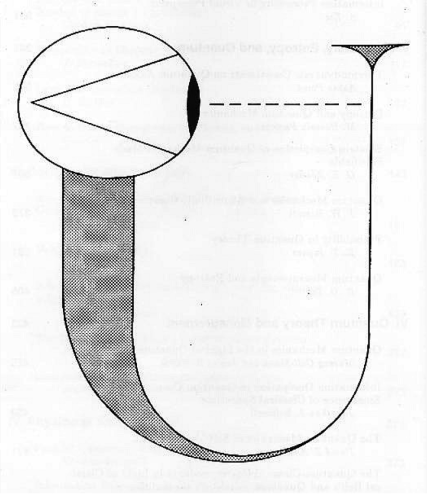
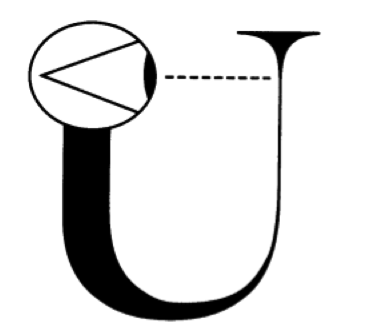
As in this symbolic representation of John Wheeler’s “Participatory Universe”, we see ourselves as the reflexive eye that has emerged within life’s story, and looks back at where it has come from. So… if you’re feeling down, remember:
Accept your self, just as you are.
Accept the world, just as it is.
See the connections.
Live. Die. Hide. Seek.
Don’t chase happiness, express it.
Life is a game, have fun with it.
Participate. Play.

[1] Alan Watts, The Meaning of Happiness: The Quest for Freedom of the Spirit in Modern Psychology and the Wisdom of the East (London: Village Press, 1968). p. xi.
[2] The Meaning of Happiness. p. iv.
[3] The Meaning of Happiness. p. vi.
[4] The Meaning of Happiness. p. xxi.
[5] The Meaning of Happiness. p. xxiii.

[6] Alan Watts, The Book : On the Taboo against Knowing Who You Are (London: Jonathan Cape, 1969). p. 118.

Share this article


Life is short, break the rules…

“Life is short, break the rules, forgive quickly, kiss slowly, love truly, laugh uncontrollably, and never regret anything that made you smile. Twenty years from now you will be more disappointed by the things you didn’t do than by the ones you did. So throw off the bowlines. Sail away from the safe harbor. Catch the trade winds in your sails. Explore. Dream. Discover.”

~ Mark Twain ~

Grandfather Mountain, North Carolina.


Share this article


Unknowns

How do you “know” something? How do you know it is “true”? I have been going through old diaries, intrigued by the development of thoughts and ideas through time. The following is a little rant I had in 2009 about knowledge and truth…

From the origins of humanity, life and our universe, to the possibility of multi-verses, forces or even beings that are invisible to our senses, some things may always be unknown. For all we know we might be bits inside a computer, replicates of another group of humans, who evolved in the way our science tells us, or inside a computer-like creation designed by beings of who-knows-what nature. Smaller than ants to humans, humans are to the infinite universe/s.

Clearly there are some things we KNOW we KNOW – limited to our mind and bodily senses. Our “knowns” come dow to the combination of matter and energy contained in a human allow the majority to think, see, hear, eat, drink, taste, smell, feel, love, hate, laugh and cry.

There are some things we DO NOT KNOW we DO NOT KNOW – seeing that five hundred years ago we didn’t know the world was round, imagine the knowledge we will discover in the future.

There are some things we KNOW will DO NOT KNOW – the incomprehensible possibilities of what is outside our universe, and whether there was always something (God, a cell or otherwise), or if at one stage in the history of everything, there once existed nothing.

It seems to me, the MORE WE KNOW the MORE WE KNOW WE DON’T KNOW.

Given we know we do not know so many things, I conclude:

a) we may as well be content with our lack of knowledge, and admit the limits to what we think we “know”.

b) it can still be interesting to ponder the mysteries – curiosity might kill the cat but before it does so it makes life more fun

c) knowledge is not fixed. “Truth” (and what is attached to all moral objectives) changes with language and culture.

Therefore never, ever, stop questioning. Always strive for better answers. And better answer. And better answers still…

Photo:

On a recent trip to Grandfather Mountain, North Carolina – not a bad sunset hey!

Share this article


Evolution not Revolution

I’ve been thinking about the idea of a “revolution”, and wondering why exactly one would want to “revolve” to the beginning, completely start again? What would be the point of bring down The Pyramid, only to have to build one up again?

Revolution may not be a dirty word, but it does seem kinda stupid. Capitalism and democracy have done a lot of good for society, from technological advances that enhance the lives of many, to bringing women out of the house, and empowering citizens to have a right to vote. Of course our  versions of capitalism and democracy are no where near perfect. They are systems still in their teenage years. They need to grow up, reform some of their irresponsible laws, and evolve into mature systems that doesn’t ignore parts of the world suffering from poverty and environmental destruction at their hands. Sure our systems have their problems, but are they so broke that we have to throw them out completely?

It seems pyramids of power are a model that can function very well, but can also fail. The trick, it seems to me, it to maintain a pyramid of power/money/organization that works for both the parts, and the whole.

Let me use the Hobbesian analogy of a society and its leaders as a mind and body (if you look close the Leviathan’s body is made up of lots of little people):

Our minds have a certain degree of power over our body’s actions. So long as our mind and body acts in constant communication, our organism is a functioning system. If my leg wanted to be my brain, or if my brain ignored my leg, I would be in trouble. If my hands ignore our stomach and put too much, too little or the wrong type of foods in my mouth, my body gets fat, my energy decreases and my entire being suffers. A healthy “me” = a mind, body and spirit being respectful and connected with each other, and with its surroundings.

Similarly in society, good minds acting in leadership positions provides for a healthy system of people. The leader in constant communication with the people, each feeding back into each others decisions, each respecting the other. Yet if, like a  psychologically damaged mind, a leader that is a psychopath or that doesn’t listen to its people is no good for anyone.

I don’t think our system is completely broken – it just needs a few of its laws reformed, evolving the system to work for humanity rather than letting the destructive aspects of it that have emerged over time force humanity to work for it. I vote for an evolution, not a revolution.

Share this article


“Shareholder Capitalism” VS “Socialised Capitalism”

Why did our political leaders bail out banks (who caused the GFC) rather than the public (who lost wealth and jobs as a result)? Why did governments spend trillions of dollars repairing a system that, in the well-known cycle of booms and busts, is destined to crash once again? Why are they bandaiding problems caught up in a powerbroker system that is visibly failing, rather than following the advice of economists like Joseph Stiglitz, who suggest seizing the opportunity for reform? Why do our political leaders seem to support “Shareholder Capitalism” rather than investigating the process of moving toward a “Socialised Capitalism” that might be more constructive?

As the Occupy Wall St movement spreads across the world, people are questioning a number of aspects of our system that they previously left unexamined. One of those is the assumption that Capitalism as we know it today is the only version of Capitalism that is possible. While economists recognize the varieties of Capitalism that exist throughout the world, the varieties can be less visible to the average human eye.

The thing is, the Global Capitalist model as we know it today, that emphasizes neo-liberal policy, provides little regulation to banks and financial industries, and disconnects shareholder profit and public loss, is by no means a fixed and final version of the Capitalist model. In fact, it is clear that such a form of Capitalism is destined for ongoing collapse. In short, it’s time for reform.

What does a shift from “shareholder capitalism” to “socialised capitalism” involve? The Australian School of Business article that inspired this blog entry suggests this shift would involve a move from short-term speculation to long-term investments, from huge corporations to family-owned companies. ‘The differentiating factor lies in the allocation of resources‘. [1]

“Make no mistake,” Andrew Kakabadse explains, “both ideas are market-driven… which is either in short-term deals driven by cash flow to cater to the few or in infrastructure and highly innovative family businesses that deliver long-term wealth to society as a whole. Nobody takes notice of this second model, which has by far the greatest wealth creation potential in the world, despite everything that is happening”.[1]

Hang on a second, which creates the most wealth? What’s more appealing then, shareholder capitalism or socialised capitalism??? Isn’t it in our favour to create more wealth, not less?

I don’t know the pragmatic details of how such a shift could be actualized. How could you stop short-term speculation (derivatives, hedge bets etc) deals going down? How could governments encourage a move from corporation to family-owned companies? How can resources be reallocated to promote a more people-friendly system? It is too late at night, and I’m too tired from recent adventures in Chicago, DC and car accidents (which I’ll blog about soon), for me to contemplate such answers. I will therefore conclude with my take-away message from this article, that some kind of “socialised capitalism” is an appealing direction to be heading… do you agree?

[1] “Off the Record: Spilling the Bilderberg Secrets” Published: October 11, 2011 in Knowledge@Australian School of Business. http://knowledge.asb.unsw.edu.au/article.cfm?articleId=1489

Share this article


Where do good ideas come from?

“Art is the imagination at play in the field of time. Let yourself play.” [1]

Do you ever wonder where your good ideas come from? Have you ever tried tracing them back to their source/s? When you have writer’s block or the equivalent, how do you deal with it? How do you regain your creativity?

Tonight I’m meeting with a group of artists to discuss a book called “The Artist’s Way” by Julia Cameron. One of the first things she mentions is that you can’t teach a person to be creative – you can only teach them to let themselves be creative.

How do you “let yourself be creative”? Where does creativity come from? How can you get more good ideas?

This RSA Animate with Steven Johnson suggests that most ideas come from one small hunch colliding with other small hunches:

YouTube Preview Image

“The position of the artist is humble. He is essentially a channel.” Piet Mondrian.

Has there ever been a completely “new” idea or invention that wasn’t connected with already existing ideas and inventions? I don’t think so. I think it’s the nature of our being to continually be in a state of evolution – with now more than ever, small changes and small ideas joining together to make bigger ones, which combine in the ongoing creating and changing of our world. Creativity is something that we channel from all the people, experiences and energies that surround and penetrate us.

I can trace most of my “good ideas” (at least the ideas that I consider “good”) back to conversations and experiences that I wouldn’t have had if it weren’t for friends, family and other people I’ve met. Creativity doesn’t come out of no where, it comes from many places. Out of a network of relationships, ideas evolve and emerge to create something “new”.

I think the way to let these ideas come, the way to let the creativity flow, is to (1) be promiscuous, (2) pay attention, and (3) connect the dots.

(1) Be promiscuous. “Intellectual promiscuity” (as a friend back in Sydney calls it) means reading many different books, hanging out with many different types of people, and learning to see the world through many different lenses. Such promiscuity stimulates creativity.

(2) Pay attention. Take note of what you learn from these sources. What concepts intuitively stand out to you.

(3) Connect the dots. Bringing your notes from above together to create something new.

I may have posted this before, but it’s such a good one I’ll post it again. An RSA Animate – Ken Robinson on how School Kills Creativity:

YouTube Preview Image

We are all creative beings, we just have to give ourselves the time and space to discover, explore and express it.


[1] Julia Cameron (1992) The Artist’s Way, Putnam: New York. p. 24.


Share this article


The woe of efficiency

Inefficiency is a good thing,” a wise friend informed me six months ago. I must have looked confused.

“When I said this to a room full of corporates, you should have seen the horror on their faces!” My face would have read pretty much the same. Inefficiency is good???

“How?” I asked in almost disbelief.

“Friendship, for example, spending time with people you love. It’s entirely inefficient… All the things in life that are wonderful, involve being inefficient. Think about it: Art. Love. Reflection. Contemplation. These things don’t happen in a rush. They take time. You need to be inefficient.”

But “Time, we say, is money, and, boy, that’s for real!” says Alan Watts, in Does it Matter?:

“Even sex is becoming acceptable for the same reason: it is good for you; it is a healthy, tension–reducing “outlet”—to use Kinsey’s statistical term for counting orgasms—and some wretched hygienist will soon figure out the average person’s minimum daily requirement of outlets (0.428 would be three times a week) so that we can screw with a high sense of duty and freedom from guilt.”

He goes on to explain that: “We get such a kick out of looking forward to pleasures and rushing ahead to meet them that we can’t slow down enough to enjoy them when they come.”

“The heart of the matter is that we are living in a culture which has been hypnotized with symbols—words, numbers, measures, quantities, and images—and that we mistake them for, and prefer them to, physical reality… A culture is hardly a culture at all when it does not provide for the most sophisticated training in the fundamental arts of life: farming, cooking, dining, dressing, furnishing, and love–making. Where these arts are not cultivated with devotion and skill, time to spare and money to spend are useless.”

For someone from a business and economics background, which based on efficiency, this shift from efficiency = bad, can take a while to truly comprehend, and even longer to integrate into one’s life.

Ever since school I’ve judged myself on how much I have “got done”. How many boxes on my to-do list I have ticked. I couldn’t relax till my homework was complete. My day was a good day if it had been an efficient one.

In my first serious relationship it took time for me to adjust. When you are in love, you tend to spend time doing the most inefficient things. You drive out of your way, you sit around watching TV, you talking for hours, you fight and make up. Almost everything you do when in love is inefficient. Each action is unmeasurable. There’s no tick boxes in love.

I did adjust. I learned to be inefficient. It felt good. It forced me to relax.

It was a long relationship, and few years have passed since it ended. Old habits die hard.

Without a reason to be inefficient I ascended or descended, depending how you judge it, back into my more efficient state. All my time became my time again, to do all the things I wanted to do. If I wanted to work a 14-hour day on my research, I could. There was no one else to think about. Just me. So I “followed my bliss”, got myself wrapped up in research, writing and creative projects that I loved doing. I really love these things. Yet in time, efficiency takes its toll.

Sometimes I catch myself on skype, on the phone, or even in person, with friends or family, and I notice my mind wonder off to think about various ideas and projects. At times I find it hard to go out of my way for others. It can be hard to justify a weekend away, time out, reading novels that aren’t teaching me something, spending time doing nothing. Sometimes even yoga feels like a trade-off – I can do yoga or I can do more study, and I choose to do the latter. The worst feeling is when stuck in traffic or waiting in line or in a dead boring conversation – in any situation where time is being wasted – and some part inside me cringes, an inner frustration of time ticking by.

There has to be some way to navigate the efficient and inefficient.

In the short term being efficient might make me happier than ever, feeling satisfied with all I’m accomplishing. But continued in the long term too much efficiency means we miss out on the deeper, the inefficient, relationships and connectivity that we are on this planet to experience. If we aren’t careful, we will be old, grey, bald, fat, and lonely, and life will have passed us by.

After a walk in the nearby mountains, spending time taking photos like the above shot, I wrote some “notes to self”:

  • Don’t get frustrated when time disappears into nothing.
  • Put time into friendships without feeling rushed. Be present during that time.
  • Learn to say yes, no, or later, as fits with what I wants to do. You can’t do everything.
  • Better to do less and do it less efficiently, then feel like you are your own production line. Times have changed since Henry Ford’s assembly line.
  • Creativity and quality are assets of the future. Efficiency is the antithesis of creativity.
  • Meditate. Exercise. Relax. Find your balance.
  • Cherish quality. Put love into your food. Cultivate the arts. Enjoy… Be inefficient.

It is what one does when they are inefficient that makes life worth living.

Share this article


Attention and Ignore-ance

Did you know that Eskimos have five words for snow while the Aztecs had one word for snow-rain-hail combined?

That which we do not have the vocabulary for, we tend not to notice. Those things which we notice, we create a vocabulary for. Through the processes of noticing, vocalizing, pondering and comprehending, we build up an understanding of the world in which we live.

“We speak of attention as noticing. To notice is to select, to regard some bits of perception, or some features of the world, as more noteworthy, more significant, than others. To these we attend, and the rest we ignore – for which reason conscious attention is at the same time ignoreance (i.e., ignorance) despite the fact that it gives us a vividly clear picture of whatever we chose to notice.” [1]

The double process of noticing is governed by:

(1) ‘whatever seems advantageous or disadvantageous for our survival, our social status, and the security of our egos’ and (2) the systems of notation that are ‘learned from others, from our society and our culture.’[2]

Our identity and our survival are connected to the aspects of life that we notice and that we ignore, all of which is intrinsically connected to our language.

Through this vocabulary, and the stories associated with them, we build up a self-centric idea about reality.

In this way languages play a paradoxically liberating and limiting role in our lives.


[1] Watts, Alan (1969). The Book : On the Taboo against Knowing Who You Are. London: Jonathan Cape. p. 35.

[2] Ibid. p. 35-6.

Share this article


What are you looking for?

What are you looking for? What do you want? If you don’t know, how will you know when you have it?

This was a problem faced after eating a mushroom in Amsterdam. We were walking around aimlessly. We didn’t know what we were looking for! My friend through up her arms, “How are we going to get anywhere if we don’t know where we want to go?!”

A bridge pose wasn’t much of a solution…

I think I’ve been facing a similar problem with my life: how do bridge toward a future without knowing where that future lies? How am I going to get anywhere, if I don’t know where I want to go?

Be it in decisions of travel, career, or love, in the past I have known what I want after I get it. When from out of nowhere I get a strong feeling that something is just “right”. When my mind can’t think of anything else. When my fingers can’t help but pick up a pen and write. When I make a spare-of-the moment decision, buy a plane ticket and everything works out perfectly.

Some decisions feel like they have been made by some version of Self that is outside myself. I can not not do that thing, make that decision, spend time with that person. That’s how I know it’s what I want. I just know.

But what happens when you find yourself in the middle-land? What should you do when your “intuition”, your “higher self”, or your “God” seems to have abandoned you?

There are times in life where one’s intuition doesn’t seem to speak up. Times when everything seems to go wrong. Times where you can’t see your options, times when there seem to be too many. Times when you are confused. Times when you really don’t know what you are looking for. Then what?

Maybe it’s at times like this we need to take our mind back a few steps:

  • Can you trace your steps backward, like when you lose your keys, and find your “self” again?
  • When was the last time you felt you knew? How did you get from there to the place you are now?
  • Could you be in the place you are in order to learn something? What’s the lesson?
  • Is it time to try something new?
  • If you’re not happy now is there anything you can change to bring back your happy place?

There are things we have control over, and there are things we don’t. The more aware we are of these, the more chance we have of creating for ourselves the reality we want.

The Footprints poem tells a mythical story of a man walking on the beach looking back at his life in footsteps on the sand. Most of the time there are two sets – his, and “God”s. In the man’s hardest times there is only one set of feet. “God” seems to have abandoned him.

My trip around Europe, peaking with my accident in Greece, left me feeling this way. I was questioning EVERYTHING. I was ready to go back to Sydney. I wanted to be surrounded by my family and friends. I realized how much I missed them. I realized how important they are to my life. I realized how great my life is back in Sydney: my little apartment, the coffee-shops, the beach, ease-of-life. I wanted to go home.

I pushed on with my journey. Arriving in the US I was sick to my stomach with feelings of uncertainty. I was more homesick than I’ve ever been.

“What am I doing with my life?” I kept asking myself. Sure I’m doing a PhD. But why? Do you want to teach? Or do you want to write? Do you want to make money? Or do you want to have a family? Do you want to keep traveling? What’s the point in my doing the things I am doing? Are they taking me where I want to go? Or should I just go home? If I do go home, what will I do when I get there?

A friend of mine recommended I sit down and write at the top of a piece of paper “What is the purpose of Juliet?” Then write everything that comes into my head. “When you break down and cry, you know you have hit something.”

I hit that point pretty quick. This exercise, along with time, and seeing the healing of my physical wounds, has helped my mind return to a more normal place.

Though I don’t know what my next step will be – how long I’ll stay in the US, or where I’ll go next, or when I’ll go home – but I have returned to feeling comfortable with that.

The uncertainty is exciting. An unknown future means anything is possible.

The Footprints poem concludes with “God” saying, “When you saw only one set of footprints, it was then that I carried you.”

It’s a message of faith: of letting go, of acceptance, and trust. Pay attention to everything that is going on around you. Be limber. Be flexible. Open your eyes. Open your mind to options and ideas that you never thought of. Sleep, eat, exercise, meditate. Be merry. We don’t always need to know exactly where we are going.

Maybe it’s times that we feel the most lost and confused that we need to have the most faith. I’m not talking about faith that people think of means believing in a supernatural religious God. But faith in the bigger story we are a part of. Faith that everything going on in our smaller stories will turn out ok. Faith that comes with understanding that in time we will lose some battles, win others, have an apotheosis, discover the ultimate boon, and return to oneness that we first left. Faith that as we continue on our journey, the energy of the universe (call it God or the Great Storyteller or any other name) will carry us to ever-new horizons.

One of those horizons for me … finish editing my book.


Share this article


Joseph Campbell – The Hero’s Journey

In The Hero with a Thousand Faces Joseph Campbell looks at myths and psychology – showing the connection between the stages of the “monomyth” seen in religion, movies and the journey of each of our lives. I’m using this book along with some other Joseph Campbell books and videos for my class…

“The mythological hero, setting forth from his common-day hut or castle, is lured, carried away, or else voluntarily proceeds, to the threshold of adventure. There he encounters a shadow presence that guards the passage. The hero may defeat or conciliate this power and go alive into the kingdom of the dark (brother-battle, dragonbattle; offering, charm), or be slain by the opponent and descend in death (dismemberment, crucifixion). Beyond the threshold, then, the hero journeys through a world of unfamiliar yet strangely intimate forces, some of which severely threaten him (tests), some of which give magical aid (helpers). When he arrives at the nadir of the mythological round, he undergoes a supreme ordeal and gains his reward. The triumph may be represented as the hero’s sexual union with the goddess-mother of the world (sacred marriage), his recognition by the father-creator (father atonement), his own divinization (apotheosis), or again —if the powers have remained unfriendly to him—his theft of the boon he came to gain (bride-theft, fire-theft); intrinsically it is an expansion of consciousness and therewith of being (illumination, transfiguration, freedom). The final work is that of the return. If the powers have blessed the hero, he now sets forth under their protection (emissary); if not, he flees and is pursued (transformation flight, obstacle flight). At the return threshold the transcendental powers must remain behind; the hero re-emerges from the kingdom of dread (return, resurrection). The boon that he brings restores the world (elixir).” p. 227-8.

I wish we had time in class to watch all of this series The Power of Myth with Bill Moyers – the first half of the first video (back to VHS!) was great… I guess I’m the teacher, so maybe we can :)

YouTube Preview Image

I have my class discussing each stage of the “monomyth” / “The Hero’s Journey” in relation to Avatar (everyone has seen and loves) and The Matrix (which half hadn’t seen so we watched in class). Next week is week 4, of 16 weeks. Crazy how fast time is flying by. Anyway enough babbling, here it is – Joseph Campbell’s monomyth:


Departure

1. The Call to Adventure
‘This first stage of the mythological journey—which we have designated the “call to adventure” —signifies that destiny has summoned the hero and transferred his spiritual center of gravity from within the pale of his society to a zone unknown. This fateful region of both treasure and danger may be variously represented: as a distant land, a forest, a kingdom underground, beneath the waves, or above the sky, a secret island, lofty mountaintop, or profound dream state; but it is always a place of strangely fluid and polymorphous beings, unimaginable torments, superhuman deeds, and impossible delight.’ p. 53.

2. Refusal of the Call
‘Often in actual life, and not infrequently in the myths and popular tales, we encounter the dull case of the call unanswered; for it is always possible to turn the ear to other interests. Refusal of the summons converts the adventure into its negative. Walled in boredom, hard work, or “culture,” the subject loses the power of significant affirmative action and becomes a victim to be saved.’ p. 54.

3. Supernatural Aid

‘For those who have not refused the call, the first encounter of the hero-journey is with a protective figure (often a little old crone or old man) who provides the adventurer with amulets against the dragon forces he is about to pass.’ p. 63.

4. The Crossing of the First Threshold

‘With the personifications of his destiny to guide and aid him, the hero goes forward in his adventure until he comes to the “threshold guardian” at the entrance to the zone of magnified power. Such custodians bound the world in the four directions — also up and down—standing for the limits c the hero’s present sphere, or life horizon. Beyond them is dark less, the unknown, and danger; just as beyond the parental watch is danger to the infant and beyond the protection of his society danger to the member of the tribe. The usual person is more than content, he is even proud, to remain within the indicated bounds, and popular belief gives him every reason to fear so much as the first step into the unexplored. Thus the sailors of the bold vessels of Columbus, breaking the horizon of the medieval mind —sailing, as they thought, into the boundless ocean of immortal being that surrounds the cosmos, like an endless mythological serpent biting its tail—had to be cozened and urged on like children, because of their fear of the fabled leviathans, mermaids, dragon kings, and other monsters of the deep.’ p. 71.

5. The Belly of the Whale

The idea that the passage of the magical threshold is a transit into a sphere of rebirth is symbolized in the worldwide womb image of the belly of the whale. The hero, instead of conquering or conciliating the power of the threshold, is swallowed into the unknown, and would appear to have died… here, instead of passing outward, beyond the confines of the visible world, the hero goes inward, to be born again. The disappearance corresponds to the passing of a worshiper into a temple where he is to be quickened by the recollection of who and what he is, namely dust and ashes unless immortal. The temple interior, the belly of the whale, and the heavenly land beyond, above, and below the confines of the world, are one and the same. That is why the approaches and entrances to temples are flanked and defended by colossal gargoyles: dragons, lions, devil-slayers with drawn swords, resentful dwarfs, winged bulls. These are the threshold guardians to ward away all incapable of encountering the higher silences within. They are preliminary embodiments of the dangerous aspect of the presence, corresponding to the mythological ogres that bound the conventional world, or to the two rows of teeth of the whale. They illustrate the fact that the devotee at the moment of entry into a temple undergoes a metamorphosis… His secular character remains without; he sheds it, as a snake its slough. Once inside he may be said to have died to time and returned to the World Womb, the World Navel, the Earthly Paradise. The mere fact that anyone can physically walk past the temple guardians does not invalidate their significance; for if the intruder is incapable of encompassing the sanctuary, then he has effectually remained without. Anyone unable to understand a god sees it as a devil and is thus defended from the approach. Allegorically, then, the passage into a temple and the hero-dive through the jaws of the whale are identical adventures, both denoting, in picture language, the life-centering, life-renewing act.’ p. 83-5.

Initiation

6. The Road of Trials
‘ONCE having traversed the threshold, the hero moves in a dream landscape of curiously fluid, ambiguous forms, where he must survive a succession of trials. This is a favorite phase of the mythadventure. It has produced a world literature of miraculous tests and ordeals. The hero is covertly aided by the advice, amulets, and secret agents of the supernatural helper whom he met before his entrance into this region. Or it may be that he here discovers for the first time that there is a benign power everywhere supporting him in his superhuman passage.’ p. 89.

‘The original departure into the land of trials represented only the beginning of the long and really perilous path of initiator)’ conquests and moments of illumination. Dragons have now to be slain and surprising barriers passed—again, again, and again. Meanwhile there will be a multitude of preliminary victories, unretainable ecstasies, and momentary glimpses of the wonderful land.’ p. 100.

7. The Meeting with the Goddess

‘The ultimate adventure, when all the barriers and ogres have been overcome, is commonly represented as a mystical marriage of the triumphant hero-soul with the Queen Goddess of the World. This is the crisis at the nadir, the zenith, or at the uttermost edge of the earth, at the central point of the cosmos, in the tabernacle of the temple, or within the darkness of the deepest chamber of the heart.’ p. 100.

‘The mythological figure of the Universal Mother imputes to the cosmos the feminine attributes of the first, nourishing and protecting presence. The fantasy is primarily spontaneous; for there exists a close and obvious correspondence between the attitude of the young child toward its mother and that of the adult toward the surrounding material world.’ p. 103.

‘Woman, in the picture language of mythology, represents the totality of what can be known. The hero is the one who comes to know. As he progresses in the slow initiation which is life, the form of the goddess undergoes for him a series of transfigurations: she can never be greater than himself, though she can always promise more than he is yet capable of comprehending. She lures, she guides, she bids him burst his fetters. And if he can match her import, the two, the knower and the known, will be released from every limitation. Woman is the guide to the sublime acme of sensuous adventure. By deficient eyes she is reduced to inferior states; by the evil eye of ignorance she is spellbound to banality and ugliness. But she is redeemed by the eyes of understanding. The hero who can take her as she is, without undue commotion but with the kindness and assurance she requires, is potentially the king, the incarnate god, of her created world.’ p. 106.

8. Woman as the Temptress

‘The mystical marriage with the queen goddess of the world represents the hero’s total mastery of life; for the woman is life, the hero its knower and master. And the testings of the hero, which were preliminary to his ultimate experience and deed, were symbolical of those crises of realization by means of which his consciousness came to be amplified and made capable of enduring the full possession of the mother-destroyer, his inevitable bride. With that he knows that he and the father are one: he is in the father’s place.

‘Thus phrased, in extremest terms, the problem may sound remote from the affairs of normal human creatures. Nevertheless, every failure to cope with a life situation must be laid, in the end, to a restriction of consciousness. Wars and temper tantrums are the makeshifts of ignorance; regrets are illuminations come too late. The whole sense of the ubiquitous myth of the hero’s passage is that it shall serve as a general pattern for men and women, wherever they may stand along the scale. Therefore it is formulated in the broadest terms. The individual has only to discover his own position with reference to this general human formula, and let it then assist him past his restricting walls. Who and where are his ogres”? Those are the reflections of the unsolved enigmas of his own humanity. What are his ideals’? Those are the symptoms of his grasp of life.

‘In the office of the modern psychoanalyst, the stages of the hero-adventure come to light again in the dreams and hallucinations of the patient. Depth beyond depth of self-ignorance is fathomed, with the analyst in the role of the helper, the initiatory priest. And always, after the first thrills of getting under way, the adventure develops into a journey of darkness, horror, disgust, and phantasmagoric fears.

‘The crux of the curious difficulty lies in the fact that our conscious views of what life ought to be seldom correspond to what life really is. Generally we refuse to admit within ourselves, or within our friends, the fullness of that pushing, self-protective, malodorous, carnivorous, lecherous fever which is the very nature of the organic cell. Rather, we tend to perfume, whitewash, and reinterpret; meanwhile imagining that all the flies in the ointment, all the hairs in the soup, are the faults of some unpleasant someone else.

‘But when it suddenly dawns on us, or is forced to our attention, that everything we think or do is necessarily tainted with the odor of the flesh, then, not uncommonly, there is experienced a moment of revulsion: life, the acts of life, the organs of life, woman in particular as the great symbol of life, become intolerable to the pure, the pure, pure soul.’ p. 111-12.

9. Atonement with the Father

‘The paradox of creation, the coming of the forms of time out of eternity, is the germinal secret of the father. It can never be quite explained. Therefore, in every system of theology there is an umbilical point, an Achilles tendon which the finger of mother life has touched, and where the possibility of perfect knowledge has been impaired. The problem of the hero is to pierce himself (and therewith his world) precisely through that point; to shatter and annihilate that key knot of his limited existence. The problem of the hero going to meet the father is to open his soul beyond terror to such a degree that he will be ripe to understand how the sickening and insane tragedies of this vast and ruthless cosmos are completely validated in the majesty of Being. The hero transcends life with its peculiar blind spot and for a moment rises to a glimpse of the source. He beholds the face of the father, understands —and the two are atoned.’ p. 135.

‘Atonement (at-one-ment) consists in no more than the abandonment of that self-generated double monster—the dragon thought to be God (superego) and the dragon thought to be Sin (repressed id). But this requires an abandonment of the attachment to ego itself; and that is what is difficult. One must have a faith that the father is merciful, and then a reliance on that mercy. Therewith, the center of belief is transferred outside of the bedeviling god’s tight scaly ring, and the dreadful ogres dissolve.’ p. 120.

‘The magic of the sacraments (made effective through the passion of Jesus Christ, or by virtue of the meditations of the Buddha), the protective power of primitive amulets and charms, and the supernatural helpers of the myths and fairy tales of the world, are mankind’s assurances that the arrow, the flames, and the flood are not as brutal as they seem. For the ogre aspect of the father is a reflex of the victim’s own ego —derived from the sensational nursery scene that has been left behind, but projected before; and the fixating idolatry of that pedagogical nonthing is itself the fault that keeps one steeped in a sense of sin, sealing the potentially adult spirit from a better balanced, more realistic view of the father, and therewith of the world… It is in this ordeal that the hero may derive hope and assurance from the helpful female figure, by whose magic (pollen charms or power of intercession) he is protected through all the frightening experiences of the father’s ego-shattering initiation. For if it is impossible to trust the terrifying father-face, then one’s faith must be centered elsewhere (Spider Woman, Blessed Mother); and with that reliance for support, one endures the crisis—only to find, in the end, that the father and mother reflect each other, and are in essence the same.’ p. 118-120.

10. Apotheosis

The pause on the threshold of Nirvana, the resolution to forego until the end of time (which never ends) immersion in the untroubled pool of eternity, represents a realization that the distinction between eternity and time is only apparent—made, perforce, by the rational mind, but dissolved in the perfect knowledge of the mind that has transcended the pairs of opposites. What is understood is that time and eternity are two aspects of the same experience-whole, two planes of the same nondual ineffable; i.e., the jewel of eternity is in the lotus of birth and death: om mani padme hum. p. 140.

‘The first wonder to be noted here is the androgynous character of the Bodhisattva: masculine Avalokiteshvara, feminine Kwan Yin. Male-female gods are not uncommon in the world of myth. They emerge always with a certain mystery; for they conduct the mind beyond objective experience into a symbolic realm where duality is left behind. Awonawilona, chief god of the pueblo of Zuni, the maker and container of all, is sometimes spoken of as he, but is actually he-she. The Great Original of the Chinese chronicles, the holy woman T’ai Yuan, combined in her person the masculine Yang and the feminine Yin.”‘ The cabalistic teachings of the medieval Jews, as well as the Gnostic Christian writings of the second century, represent the Word Made Flesh as androgynous- which was indeed the state of Adam as he was created, before the female aspect, Eve, was removed into another form. And among the Greeks, not only Hermaphrodite (the child of Hermes and Aphrodite), but Eros too, the divinity of love (the first of the gods, according to Plato), were in sex both female and male. p. 140-1.

‘”So God created man in his own image, in the image of God created he him; male and female created he them.” The question may arise in the mind as to the nature of the image of God; but the answer is already given in the text, and is clear enough. “When the Holy One, Blessed be He, created the first man, He created him androgynous.” The removal of the feminine into another form symbolizes the beginning of the fall from perfection into duality; and it was naturally followed by the discovery of the duality of good and evil, exile from the garden where God walks on earth, and thereupon the building of the wall of Paradise, constituted of the “coincidence of opposites,” by which Man (now man and woman) is cut off from not only the vision but even the recollection of the image of God.

‘This is the Biblical version of a myth known to many lands. It represents one of the basic ways of symbolizing the mystery of creation: the devolvement of eternity into time, the breaking of the one into the two and then the many, as well as the generation of new life through the reconjunction of the two.’ p. 141-2.

‘Like the Buddha himself, this godlike being is a pattern of the divine state to which the human hero attains who has gone beyond the last terrors of ignorance. “When the envelopment of consciousness has been annihilated, then he becomes free of all fear, beyond the reach of change.’1″‘ This is the release potential within us all, and which anyone can attain—through herohood; for, as we read: “All things are Buddha-things’1;8″3 or again (and this is the other way of making the same statement): “All beings are without self.1′ The world is filled and illumined by, but does not hold, the Bodhisattva (“he whose being is enlightenment”); rather, it is he who holds the world, the lotus. Pain and pleasure do not enclose him, he encloses them—and with profound repose.’ p. 138-9.

11. The Ultimate Boon

‘The ease with which the adventure is here accomplished signifies that the hero is a superior man, a born king. Such ease distinguishes numerous fairy tales and alt legends of the deeds of incarnate gods. Where the usual hero would face a test, the elect encounters no delaying obstacle and makes no mistake. The well is the World Navel, its flaming water the indestructible essence of existence, the bed going round and round being the World Axis. The sleeping castle is that ultimate abyss to which the descending consciousness submerges in dream, where the individual life is on the point of dissolving into undifferentiated energy: and it would be death to dissolve; yet death, also, to lack the fire.

‘The motif (derived from an infantile fantasy) of the inexhaustible dish, symbolizing the perpetual life-giving, form-building powers of the universal source, is a fairy-tale counterpart of the mythological image of the cornucopian banquet of the gods. While the bringing together of the two great symbols of the meeting with the goddess and the fire theft reveals with simplicity and clarity the status of the anthropomorphic powers in the realm of myth. They are not ends in themselves, but guardians, embodiments, or bestowers, of the liquor, the milk, the food, the fire, the grace, of indestructible life.

‘Such imagery can be readily interpreted as primarily, even though perhaps not ultimately, psychological; for it is possible to observe, in the earliest phases of the development of the infant, symptoms of a dawning “mythology” of a state beyond the vicissitudes of time. These appear as reactions to, and spontaneous defenses against, the body-destruction fantasies that assail the child when it is deprived of the mother breast. “The infant reacts with a temper tantrum and the fantasy that goes with the temper tantrum is to tear everything out of the mother’s bod)-. . . . The child then fears retaliation for these impulses, i.e., that
everything will be scooped out of its own inside.”‘ Anxieties for the integrity of its body, fantasies of restitution, a silent, deep requirement for indestructibility and protection against the “bad” forces from within and without, begin to direct the shaping psyche; and these remain as determining factors in the later neurotic, and even normal, life activities, spiritual efforts, religious beliefs, and ritual practices of the adult.’ p. 159-60.

Return

12. Refusal of the Return
‘WHEN the hero-quest has been accomplished, through penetration to the source, or through the grace of some male or female, human or animal, personification, the adventurer still must return with his life-transmuting trophy. The full round, the norm of the monomyth, requires that the hero shall now begin the labor of bringing the runes of wisdom, the Golden Fleece, or his sleeping princess, back into the kingdom of humanity, where the boon may redound to the renewing of the community, the nation, the planet, or the ten thousand worlds. But the responsibility has been frequently refused. Even the Buddha, after his triumph, doubted whether the message of realization could be communicated, and saints are reported to have passed away while in the supernal ecstasy. Numerous indeed are the heroes fabled to have taken up residence forever in the blessed isle of the unaging Goddess of Immortal Being.’ p. 179.

13. The Magic Flight
‘If the hero in his triumph wins the blessing of the goddess or the god and is then explicitly commissioned to return to the world with some elixir for the restoration of society, the final stage of his adventure is supported by all the powers of his supernatural patron. On the other hand, if the trophy has been attained against the opposition of its guardian, or if the hero’s wish to return to the world has been resented by the gods or demons, then the last stage of the mythological round becames a lively, often comical, pursuit. This flight may be complicated by marvels of magical obstruction and evasion.’ p. 182.

‘The myths of failure touch us with the tragedy of life, but those of success only with their own incredibility. And yet, it’s the mono-myth is to fulfill its promise, not human failure or superhuman success but human success is what we shall have to be shown.’ p. 192.

14. Rescue from Without
‘The hero may have to be brought back from his supernatural adventure by assistance from without. That is to say, the world may have to come and get him. For the bliss of the deep abode is not lightly abandoned in favor of the self-scattering of the wakened state. “Who having cast off the world,” we read, “would desire to return again? He would be only there.”"‘ And yet, in so far as one is alive, life will call. Society is jealous of those who remain away from it, and will come knocking at the door. If the hero—like Muchukunda—is unwilling, the disturber suffers an ugly shock; but on the other hand, if the summoned one is only delayed —sealed in by the beatitude of the state of perfect being (which resembles death} —an apparent rescue is effected, and the adventurer returns.’ p. 192.

‘This brings us to the final crisis of the round, to which the whole miraculous excursion has been but a prelude—that, namely, of the paradoxical, supremely difficult threshold-crossing of the hero’s return from the mystic realm into the land of common day. Whether rescued from without, driven from within, or gently carried along by the guiding divinities, he has yet to re-enter with his boon the long-forgotten atmosphere where men who are fractions imagine themselves to be complete. He has yet to confront society with his ego-shattering, life-redeeming elixir, and take the return blow of reasonable queries, hard resentment, and good people at a loss to comprehend.’ p. 201.

15. The Crossing of the Return Threshold
‘The two worlds, the divine and the human, can be pictured only as distinct from each other—different as life and death, as day and night. The hero adventures out of the land we know into darkness; there he accomplishes his adventure, or again is simply lost to us, imprisoned, or in danger; and his return is described as a coming back out of that yonder zone. Nevertheless—and here is a great key to the understanding of myth and symbol — the two kingdoms are actually one. The realm of the gods is a forgotten dimension of the world we know. And the exploration of that dimension, either willingly or unwillingly, is the whole sense of the deed of the hero. The values and distinctions that in normal life seem important disappear with the terrifying assimilation of the self into what formerly was only otherness. As in the stories of the cannibal ogresses, the fearfulness of this loss of personal individuation can be the whole burden of the transcendental experience for unqualified souls. But the hero-soul goes boldly in —and discovers the hags converted into goddesses and the dragons into the watchdogs of the gods.

‘There must always remain, however, from the standpoint of normal waking consciousness, a certain baffling inconsistency between the wisdom brought forth from the deep, and the prudence usually found to be effective in the light world. Hence the common divorce of opportunism from virtue and the resultant degeneration of human existence. Martyrdom is for saints, but the common people have their institutions, and these cannot be left to grow like lilies of the field; Peter keeps drawing his sword, as in the garden, to defend the creator and sustainer of the world. The boon brought from the transcendent deep becomes quickly rationalized into nonentity, and the need becomes great for another hero to refresh the word.

‘How teach again, however, what has been taught correctly and incorrectly learned a thousand thousand times, throughout the millenniums of mankind’s prudent folly? That is the hero’s ultimate difficult task. How render back into light-world language the speech-defying pronouncements of the dark? How represent on a two-dimensional surface a three-dimensional form, or in a three-dimensional image a multi-dimensional meaning? How translate into terms of “yes” and “no” revelations that shatter into meaninglessness every attempt to define the pairs of opposites? How communicate to people who insist on the exclusive evidence of their senses the message of the all-generating void? Many failures attest to the difficulties of this life-affirmative threshold. The first problem of the returning hero is to accept as real, after an experience of the soul-satisfying vision of fulfillment, the passing joys and sorrows, banalities and noisy obscenities of life. Why re-enter such a world? Why attempt to make plausible, or even interesting, to men and women consumed with passion, the experience of transcendental bliss”? As dreams that were momentous by night may seem simply silly in the light of day, so the poet and the prophet can discover themselves playing the idiot before a jury of sober eyes. The easy thing is to commit the whole community to the devil and retire again into the heavenly rock-dwelling, close the door, and make it fast. But if some spiritual obstetrician has meanwhile drawn the shimenawa across the retreat, then the work of representing eternity in time, and perceiving in time eternity, cannot be avoided.’ p. 201-4.

16. Master of the Two Worlds
‘Freedom to pass back and forth across the world division, from the perspective of the apparitions of time to that of the causal deep and back—not contaminating the principles of the one with those of the other, yet permitting the mind to know the one by virtue of the other—is the talent of the master. The Cosmic Dancer, declares Nietzsche, does not rest heavily in a single spot, but gaily, lightly, turns and leaps from one position to another. It is possible to speak from only one point at a time, but that does not invalidate the insights of the rest.’ p. 212-3.

‘The myths do not often display in a single image the mystery of the ready transit. Where they do, the moment is a precious symbol, full of import, to be treasured and contemplated. Such a moment was that of the Transfiguration of the Christ… Here is the whole myth in a moment: Jesus the guide, the way, the vision, and the companion of the return. The disciples are his initiates, not themselves masters of the mystery, yet introduced to the full experience of the paradox of the two worlds in one.’ p. 213.

‘Jesus makes the point more succinctly: “Whosoever will lose his life for my sake shall find it.” The meaning is very clear; it is the meaning of all religious practice. The individual, through prolonged psychological disciplines, gives up completely all attachment to his personal limitations, idiosyncrasies, hopes and fears, no longer resists the self-annihilation that is prerequisite to rebirth in the realization of truth, and so becomes ripe, at last, for the great at-one-ment.

‘His personal ambitions being totally dissolved, he no longer tries to live but willingly relaxes to whatever may come to pass in him; he becomes, that is to say, an anonymity. The Law lives in him with his unreserved consent. Many are the figures, particularly in the social and mythological contexts of the Orient, who represent this ultimate state of anonymous presence. The sages of the hermit groves and the wandering mendicants who play a conspicuous role in the life and legends of the East; in myth such figures as the Wandering Jew (despised, unknown, yet with the pearl of great price in his pocket); the tatterdemalion beggar, set upon by dogs; the miraculous mendicant bard whose music stills the heart; or the masquerading god, Wotan, Viracocha, Edshu: these are examples. “Sometimes a fool, sometimes a sage, sometimes possessed of regal splendor; sometimes wandering, sometimes as motionless as a python, sometimes wearing a benignant expression; sometimes honored, sometimes insulted, sometimes unknown—thus lives the man of realisation, ever happy with supreme bliss. Just as an actor is always a man, whether he puts on the costume of his role or lays it aside, so is the perfect knower of the Imperishable always the Imperishable, and nothing else.”’ p. 220.

17. Freedom to Live
‘What, now, is the result of the miraculous passage and return”? The battlefield is symbolic of the field of life, where every creature lives on the death of another. A realization of the inevitable guilt of life may so sicken the heart that, like Hamlet or like Arjuna, one may refuse to go on with it. On the other hand, like most of the rest of us, one may invent a false, finally unjustified, image of oneself as an exceptional phenomenon in the world, not guilty as others are, but justified in one’s inevitable sinning because one represents the good. Such self-righteousness leads to a misunderstanding, not only of oneself but of the nature of both man and the cosmos. The goal of the myth is to dispel the need for such life ignorance by effecting a reconciliation of the individual consciousness with the universal will. And this is effected through a realization of the true relationship of the passing phenomena of time to the imperishable life that lives and dies in all. “Even as a person casts off worn-out clothes and puts on others that are new, so the embodied Self casts off worn-out bodies and enters into others that are new. Weapons cut It not; fire burns It not; water wets It not; the wind does not wither It. This Self cannot be cut nor burnt nor wetted nor withered. Eternal, all-pervading, unchanging, immovable, the Self is the same for ever.”

‘Man in the world of action loses his centering in the principle of eternity if he is anxious for the outcome of his deeds, but resting them and their fruits on the knees of the Living God he is released by them, as by a sacrifice, from the bondages of the sea of death. “Do without attachment the work you have to do…
Surrendering all action to Me, with mind intent on the Self, freeing yourself from longing and selfishness, fight—unperturbed by grief.” p. 221-2.

‘The hero is the champion of things becoming, not of things become, because he is. “Before Abraham was, I AM.” He does not mistake apparent changelessness in time for the permanence of Being, nor is he fearful of the next moment (or of the “other thing”), as destroying the permanent with its change. “Nothing retains its own form; but Nature, the greater renewer, ever makes up forms from forms. Be sure there’s nothing perishes in the whole universe; it does but vary and renew its form.” Thus the next moment is permitted to come to pass. p. 225-6.


All quotes are from:

Campbell, Joseph (1949, 2004) The Hero with a Thousand Faces. Princeton: Princeton University Press.

Learn more about Joseph Campbell, access his lectures and discussion forums through the Joseph Campbell Foundation – click here

Share this article


Telling stories…

So this semester, in Hickory, I’m teaching “Storytelling”. How does one tell a story? What distinguishes a great story from a poor one? What is the role of stories in our lives? How do stories reflect our identity? How do we use stories to create our identity? What do the stories we tell say us about our culture and values? What is the relationship between our live stories, and the story of humanity? These are some of the questions we will look at.

The assessments I’ve designed for students are, besides the exam, all blog-based. Their blogs are then posted to facebook. Why?

Because social networking is playing a role of growing importance in the 21st century. Blogging, tweeting and facemail is one of the most common and most efficient ways of telling stories.

In the shift from oral to written, written to print, and now print to online, technology is constantly shaping and reshaping our methods of communication, our methods of sharing ideas, inspiring greater and greater levels of creativity.

The process of blogging is a critically-reflective process. As you write, you consider different influences, you consider what others’ might think of what you have written, you open up conversations that can be continued over years to come.

Teaching is a two-way communication. Every person brings an entirely different set of skills, knowledge and life experiences. Through a blog students become the teacher and teachers become students. My students have already impressed me with their opinions.

I made this little prezi presentation to introduce some of the topics we’ll be discussing this semester. As whatever I do in my daily life tends to inspire what I talk about on this blog, I thought I’d share the prezi and invite you to join my class from afar.

Just press play and click through the stages. You can also create your own path by clicking on different text or YouTube boxes in your own order.

Share this article